

Why Screw Coating Matters More Than Sheet Thickness in Roofing Projects
Why Screw Coating Matters More Than Sheet Thickness in Roofing Projects
- Roofix
Why Most Roofing Failures Start at the Fastener Level
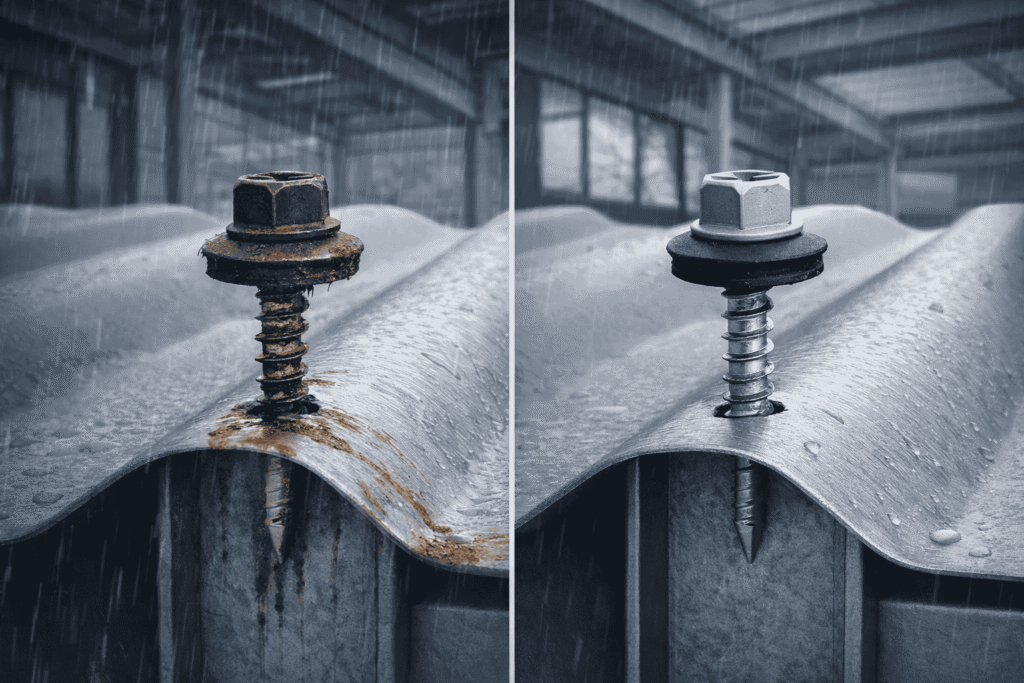
In many roofing projects, attention is heavily focused on sheet thickness, profile design, and brand selection. While these factors matter, one critical component is often underestimated — the coating on the roofing screw.
Across industrial sheds, warehouses, and commercial roofs, premature rusting, leaks, and loosening rarely happen because the sheet failed first. In most cases, the issue begins at the fastener, where inadequate coating allows corrosion to set in long before the roof reaches its expected lifespan.
A roofing screw is exposed to:
Continuous moisture
Temperature fluctuations
Chemical pollutants
Coastal salt air (in many parts of India)
If the coating fails, even the thickest roofing sheet cannot prevent leakage or structural damage.
This is why experienced contractors and specifiers now evaluate screw coating performance before worrying about sheet gauge — especially for long-term roofing reliability.
What Is Screw Coating & How It Actually Protects Roofing Systems
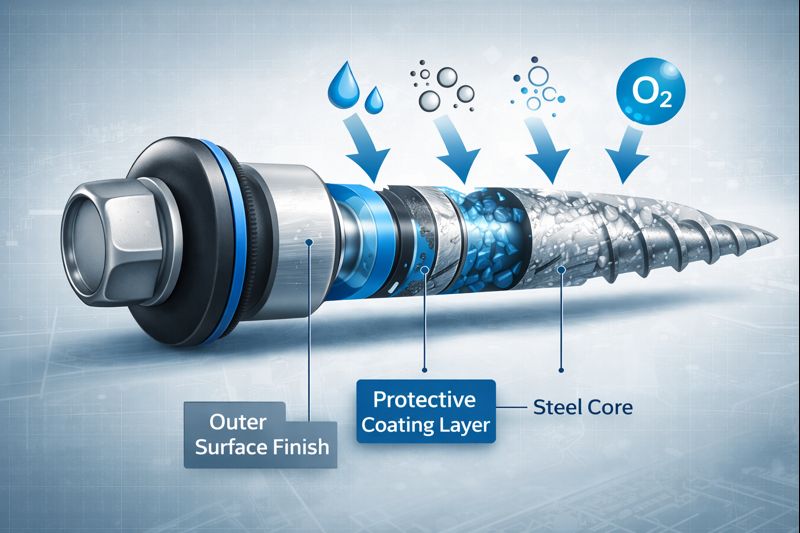
When contractors hear the term “coating”, it’s often assumed to be just a thin outer layer for appearance. In reality, screw coating is a functional protection system designed to extend the life of the fastener in aggressive roofing environments.
🔍 What Exactly Is Screw Coating?
Screw coating is a protective metallic or polymer-based layer applied over the base steel of the fastener. Its primary role is to act as a barrier between the steel core and external elements such as moisture, oxygen, and airborne chemicals.
Without proper coating, even high-strength steel screws can begin to corrode within months — especially in outdoor roofing applications.
🛡️ How Coating Protects Roofing Screws
A well-engineered screw coating works in multiple ways:
Prevents direct exposure to moisture
The coating seals the steel surface, reducing the chance of rust formation even during prolonged rain or humidity.Resists chemical and environmental attack
Industrial pollution, coastal salt air, and acidic rain can rapidly degrade unprotected fasteners. Quality coatings slow down this chemical reaction.Maintains thread integrity
Corrosion often starts at the threads. Once threads weaken, holding power reduces, leading to loosening and leaks. Coating preserves thread strength over time.Supports washer sealing performance
When the screw head and shank remain corrosion-free, EPDM washers maintain a tight, leak-proof seal for longer durations.
⚠️ Why Sheet Thickness Alone Isn’t Enough
Even if a roofing sheet is thick and durable, a failing screw becomes the weakest link. Once corrosion begins:
Screws lose grip
Water seeps through fixing points
Sheets start vibrating or lifting
Maintenance costs increase prematurely
This is why modern roofing specifications increasingly mention coating performance alongside fastener dimensions.
Common Roofing Screw Coatings Explained (And Where Each One Fits)
Not all roofing screws are coated the same way. Different coatings are designed for different environments, budgets, and performance expectations. Choosing the wrong one may look fine on day one—but can cause failures far sooner than expected.
Below is a practical breakdown of commonly used roofing screw coatings, explained in contractor-friendly terms.
1. Zinc-Plated Coating (Electroplated Zinc)
This is one of the most basic coatings used on fasteners.
What it does well:
Provides initial corrosion resistance
Suitable for dry, indoor, or low-exposure areas
Cost-effective for non-critical applications
Limitations:
Thin coating layer
Performs poorly in outdoor roofing
Rust can appear quickly in humid or polluted environments
Best used for:
Temporary fixtures, interior works, or non-exposed installations
Not recommended for: Roofing, façades, or exterior cladding
2. GI (Hot-Dip Galvanized) Coating
GI coating involves dipping the screw in molten zinc, creating a thicker protective layer.
What it does well:
Better corrosion resistance than electroplated zinc
Suitable for semi-outdoor conditions
Offers sacrificial protection (zinc corrodes before steel)
Limitations:
Coating thickness may vary
Thread sharpness can reduce if not well controlled
Limited lifespan in coastal or industrial zones
Best used for:
Basic roofing in moderate environments
Not ideal for: Coastal, high-humidity, or long-life roofing systems
3. Zinc-Aluminum / Alloy-Based Coatings
These are advanced metallic coatings designed specifically for exterior exposure.
What it does well:
Superior corrosion resistance compared to GI
Slower corrosion rate in harsh climates
Maintains thread strength and sharpness
Limitations:
Slightly higher cost than GI
Requires quality-controlled manufacturing
Best used for:
Commercial roofing, warehouses, industrial sheds
Recommended for: Long-term exterior applications
4. Hybrid & Multi-Layer Coatings (Organic + Metallic)
These coatings combine metallic layers with organic or polymer top coats.
What it does well:
Excellent resistance to moisture, salt, and chemicals
Smooth surface reduces installation torque
Consistent performance in extreme environments
Limitations:
Premium pricing
Overkill for short-term projects
Best used for:
Coastal areas, industrial zones, high-value roofing projects
Ideal for: Long-term, low-maintenance installations
Why This Matters for Contractors
Two screws may look identical on the surface—but their coating determines how long the roof stays leak-free. Selecting coating based only on price often leads to:
Early rusting
Washer failure
Costly replacements
Client dissatisfaction
Understanding coating types allows you to specify fasteners confidently, rather than reactively fixing failures later.
How to Choose the Right Screw Coating for Your Roofing Environment
Roofing failures rarely happen because of poor sheet quality alone. In most real-world cases, environment mismatch is the real problem—using the right screw, but with the wrong coating for the site conditions.
Here’s a practical way contractors and project managers should select screw coatings, based on where the roof is installed.
🌤️ 1. Dry / Low-Humidity Zones (Interior or Semi-Covered Areas)
Typical conditions:
Minimal moisture exposure
No direct rain or chemical exposure
Low pollution levels
Recommended coating types:
Zinc-plated (for non-critical use)
GI coating (for basic durability)
Why it works:
Corrosion risk is low, so advanced coatings aren’t essential. However, GI is still preferred over zinc plating if the screw is partially exposed.
🌦️ 2. Urban & Moderate Outdoor Environments
Typical conditions:
Regular rain exposure
Moderate humidity
Urban pollution and dust
Recommended coating types:
GI (Hot-Dip Galvanized)
Zinc-aluminum / alloy coatings
Why it works:
Urban environments accelerate corrosion due to pollutants. Alloy-based coatings provide a much longer service life than standard GI.
Common mistake:
Using zinc-plated screws because they “look similar” to GI—this often leads to rust within months.
🌊 3. Coastal & High-Humidity Regions
Typical conditions:
Salt-laden air
Constant moisture
High corrosion potential
Recommended coating types:
Zinc-aluminum alloy coatings
Hybrid or multi-layer coated screws
Why it works:
Salt aggressively attacks zinc. Alloy and hybrid coatings slow corrosion significantly and maintain washer sealing performance for years.
Not recommended:
Basic GI screws — they deteriorate quickly near the coast.
🏭 4. Industrial & Chemical Exposure Zones
Typical conditions:
Chemical fumes
High temperatures
Continuous moisture cycles
Recommended coating types:
Hybrid or multi-layer corrosion-resistant coatings
Why it works:
Industrial environments demand chemical resistance + flexibility, which standard metallic coatings can’t always provide alone.
🧠 Quick Rule Contractors Use on Site
If you’re unsure, ask yourself this:
“Will this screw be exposed to moisture, salt, or pollution for years?”
If the answer is yes, choose a higher-grade coating upfront. The extra cost per screw is far lower than repair or replacement costs later.
What Happens When the Wrong Screw Coating Is Used (Real-World Site Failures)
On paper, most screws look the same.
On-site, the coating choice decides whether a roof lasts years—or fails early.
Here’s what actually happens when coating selection is ignored.
🔴 1. Early Rusting at Fixing Points
What contractors notice first:
Brown rust rings around screw heads
Stains spreading on sheets
EPDM washers hardening or cracking
Why it happens:
Low-grade coatings break down under moisture and pollution. Once the coating fails, corrosion starts at the head—right where sealing matters most.
Result:
Even if the sheet is intact, water finds a path through the fastener.
🔴 2. Loss of Grip & Sheet Movement
What happens over time:
Screws loosen due to corrosion
Threads weaken inside the substrate
Sheets start rattling in wind
Why it happens:
Corrosion doesn’t just affect the surface. It eats into the threads, reducing pull-out strength.
Real impact:
Roof noise complaints, vibration damage, and re-fixing costs.
🔴 3. Washer Failure = Guaranteed Leakage
Common site observation:
Washer looks intact from far
Close inspection shows cracks or flattening
Why it happens:
Poor-quality coatings overheat during installation. This heat damages washers, reducing elasticity.
End result:
Water enters even with “tight” screws.
🔴 4. Accelerated Failure in Coastal & Industrial Areas
In harsh environments:
Zinc coatings fail first
GI degrades faster than expected
Salt and chemicals speed up corrosion
Timeline reality:
6–12 months: visible rust
12–24 months: leaks and callbacks
24+ months: full refixing required
🧠 What Experienced Contractors Learn the Hard Way
“Replacing screws costs more than choosing the right coating in the first place.”
Failures rarely happen immediately—but when they do, they affect reputation, not just repairs.
How Professional Contractors Choose the Right Screw Coating (Before Placing an Order)
Experienced contractors don’t choose screw coatings based on price alone.
They look at site conditions, roof life expectations, and long-term risk before finalizing fasteners.
Here’s how that decision is actually made on the ground.
1️⃣ Location Comes First, Not the Screw Type
Before selecting any coating, professionals ask one question:
“What environment will this roof face for the next 10–15 years?”
Urban / inland sites: Moderate pollution, occasional moisture
Industrial zones: Chemical exposure, fumes, constant dust
Coastal areas: Salt-laden air, high humidity, corrosion risk
The harsher the environment, the more critical the coating performance becomes.
2️⃣ Expected Roof Life Sets the Coating Benchmark
A temporary shed and a commercial warehouse don’t need the same protection.
Contractors typically align coating choice with:
Short-term structures: Basic corrosion resistance may suffice
Commercial & industrial roofs: Long-life coatings are non-negotiable
Client-owned assets: Reputation risk outweighs cost savings
If the roof is expected to last 10+ years, the coating must match that lifespan.
3️⃣ Sheet Material & Washer Compatibility Are Checked Together
Professionals don’t evaluate coating in isolation.
They consider:
Compatibility with metal sheets or fiber cement boards
Washer durability under installation heat
Whether the coating protects the entire fastener, not just the shank
A strong coating with a weak washer still leads to leakage.
4️⃣ Past Site Experience Plays a Big Role
Most seasoned contractors rely on experience more than datasheets.
They remember:
Which coatings failed early
Which sites had callbacks
Which screws stayed intact after years
That experience guides repeat purchasing decisions.
5️⃣ Total Cost of Ownership > Per-Screw Cost
Instead of asking “How cheap is this screw?”, professionals ask:
Will this avoid refixing?
Will this reduce maintenance?
Will this protect my client relationship?
A slightly higher upfront cost often prevents significant downstream losses.
🧠 The Contractor’s Rule of Thumb
If the coating fails, the roof fails — no matter how good the sheet is.
That’s why professionals treat coating choice as a structural decision, not a procurement shortcut.
Where Roofix Fits into Long-Term Roofing Performance
Choosing the right screw coating is only part of the equation.
The other part is consistency — in quality, specification, and supply.
This is where Roofix comes in.
Roofix focuses on supplying roofing fasteners that are engineered specifically for Indian site conditions, not generic imports meant for mixed applications. Every product category is designed keeping in mind:
High humidity and temperature variations
Industrial and urban pollution exposure
Long-term washer sealing performance
Compatibility with metal sheets, fiber cement boards, and structural steel
Instead of offering one-size-fits-all fasteners, the range is built to suit real roofing use cases — from warehouses and factories to commercial and infrastructure projects.
What contractors value most is predictability:
Consistent coating quality across batches
Reliable drilling performance
Washers that seal properly without cracking
Availability across common sizes and applications
This reduces on-site guesswork and avoids the trial-and-error that often leads to failures later.
Roofix is used not because it is “new” or “trendy”, but because it performs the same way on every site — which matters more than anything once the roof is installed.
Conclusion: Coating Choice Decides Roof Life, Not the Screw Price
Roofing failures rarely start with sheets or structures.
They usually start small — at the fastener.
As seen across real projects:
Wrong coatings lead to early corrosion
Washer failure causes leakage
Thread damage reduces holding strength
Repairs cost far more than prevention
Understanding screw coatings is not a technical luxury — it’s a practical necessity for contractors, engineers, and procurement teams.
The right coating:
Protects the roof
Protects the client’s investment
Protects the installer’s reputation
When coatings are chosen based on site conditions and expected roof life, problems reduce dramatically — and roofs perform the way they were intended to.
If you’re evaluating fasteners for upcoming projects, exploring application-specific roofing screws with proven coating performance can help avoid long-term issues before they start.
Share on:
Recent posts
Hex Head Socket for Roofing Screws: What It…
Roofing Sealants Explained: Types, Uses & How to…

EPDM Washer in Roofing Screws: Why It Matters…
Get a free Estimate
Related Posts
Hex Head Socket for Roofing Screws: What It Is…
Hex Head Socket for Roofing Screws: What It Is and Why Installers Use It Hex…
Roofing Sealants Explained: Types, Uses & How to Choose…
Roofing Sealants Explained: Types, Uses & How to Choose the Right One Roofing Sealants Explained:…
EPDM Washer in Roofing Screws: Why It Matters More…
EPDM Washer in Roofing Screws: Why It Matters More Than You Think EPDM Washer in…
