
How to Choose Between Self-Drilling and Self-Tapping Screws for Roofing
- Roofix
Self-Drilling vs. Self-Tapping Screws – The Confusion Every Roofer Faces
If you’ve ever searched for roofing screws online, you’ve probably come across two terms that sound almost identical — self-drilling and self-tapping screws.
They look similar, both are used for fixing roofing sheets, and both promise strong hold.
But here’s the truth: choosing the wrong one can cost you far more than you think.
Roof leaks, loose fittings, or cracked sheets — these problems often begin not because of the sheet, but because of the wrong fastener choice.
Understanding the difference between self-drilling and self-tapping screws helps you pick the right one for your roofing application — ensuring faster installation, better grip, and long-term corrosion protection.
In this guide, we’ll break down what makes these screws different, when to use each, and why most roofing professionals rely on self-drilling screws for performance, speed, and reliability.
What Are Self-Drilling Screws?
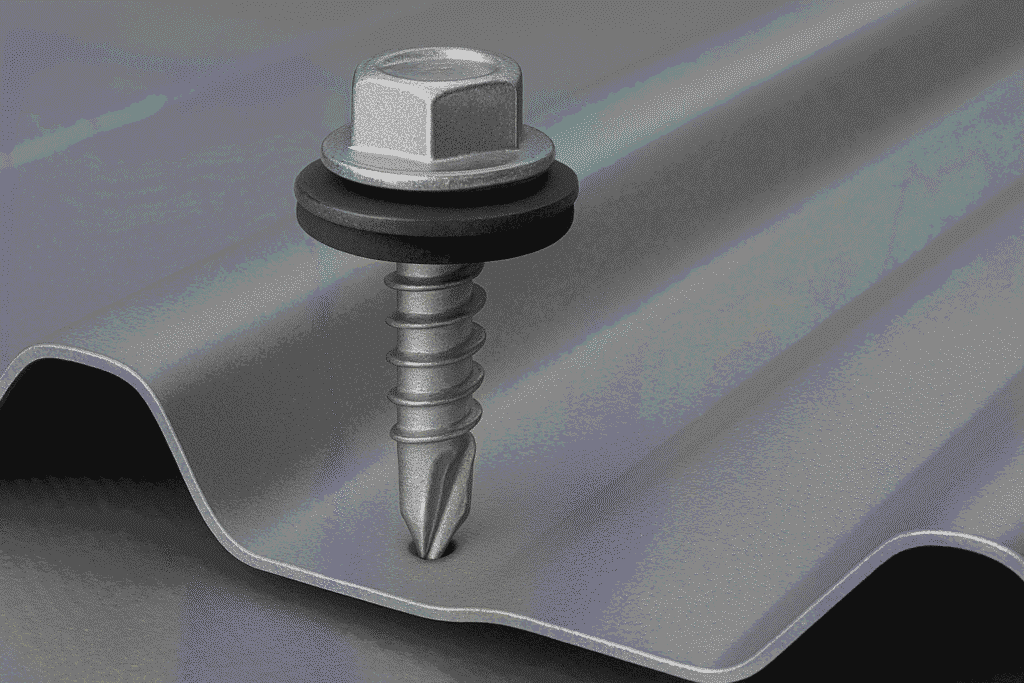
Self-drilling screws are specially designed fasteners that come with a built-in drill point at the tip — meaning they can drill, tap, and fasten all in one motion.
In simple terms, you don’t need to pre-drill a hole before installing them.
These screws are the preferred choice for metal roofing, cladding, and structural steel applications because they save time, reduce labor, and create a secure, leak-proof joint.
Key Features of Self-Drilling Screws
Integrated Drill Tip: Cuts directly into metal sheets and purlins.
High Installation Speed: Eliminates separate drilling steps.
Precise Fit: Reduces chances of over-tightening or material cracking.
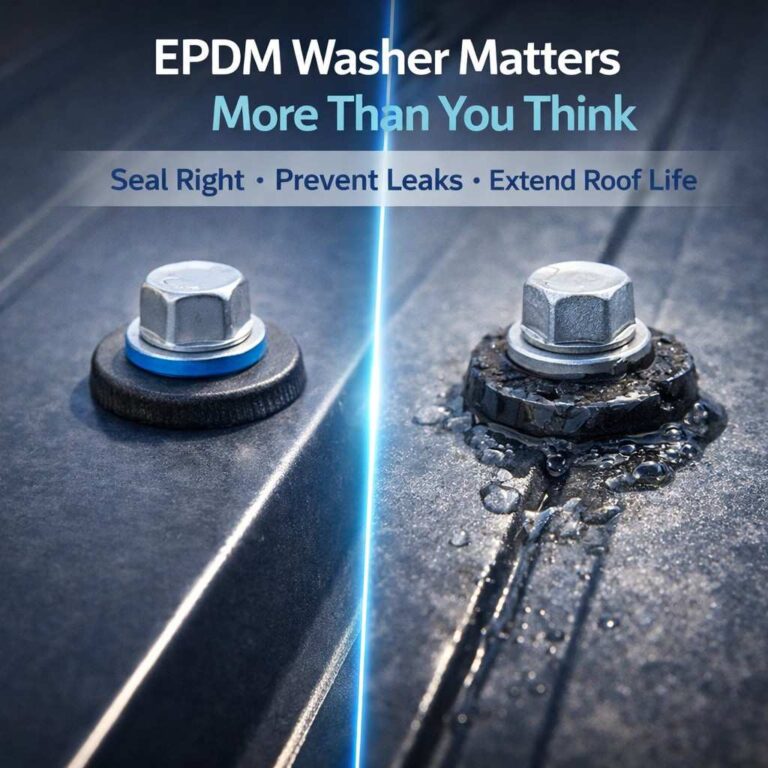
Leak-Proof Sealing: Paired with EPDM washers for long-term waterproofing.
Corrosion Resistant: Available in Class 3 and Class 4 coatings to withstand harsh weather and industrial conditions.
Best Used For:
Metal roofing sheets and purlins
PEB (Pre-Engineered Building) structures
Industrial sheds and warehouses
Steel-to-steel connections
Example:
Contractors often choose self-drilling screws when they need speed and precision — for instance, while installing large metal roofing sheets where drilling every hole separately would slow down the project significantly.
Explore Roofix Self-Drilling Screws: Self-Drilling Screws
Each Roofix screw is manufactured with uniform drill tips, rust-resistant coating, and EPDM washers to deliver consistent performance in all environments — from dry interiors to humid coastal areas.
What Are Self-Tapping Screws?
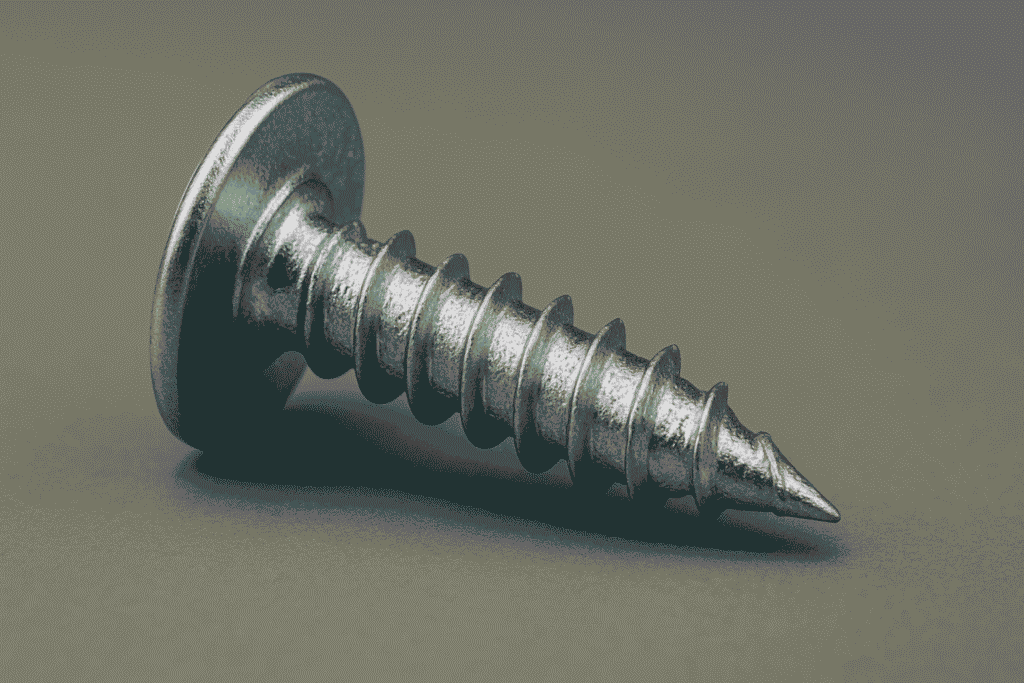
While self-drilling screws can create their own hole, self-tapping screws require a pre-drilled hole before installation. Once inserted, they “tap” their own threads into the material — creating a tight and secure fit.
In roofing and construction, self-tapping screws are commonly used for attaching metal to wood, fixing plastic sheets, or fastening components where controlled grip is needed without cracking or over-penetration.
Key Features of Self-Tapping Screws
Thread-Forming Design: Cuts its own threads into pre-drilled holes for a tight bond.
Versatile Application: Works well with wood, metal, and plastic.
Smooth Finish: Prevents material damage or surface cracks.
High Grip Strength: Ensures long-term fastening even in vibrating environments.
Corrosion Protection: Available with zinc or ceramic coatings for added durability.
Best Used For:
Polycarbonate roofing sheets
Wood-to-metal joints
HVAC and duct installations
Light steel framing and interior applications
Example:
Imagine installing polycarbonate sheets on a metal framework — using self-drilling screws might damage the sheet.
That’s where self-tapping screws come in. With a pre-drilled pilot hole, the screw forms its own threads carefully, ensuring a secure hold without cracking the delicate roofing surface.
Explore Roofix Self-Tapping Screws: Polycarbonate Roofing Screws
Roofix self-tapping screws are designed with precision threading, EPDM washers, and corrosion-proof coatings, ensuring that transparent or brittle roofing materials stay firmly fixed — with zero leaks and zero cracks.
Self-Drilling vs Self-Tapping Screws: Key Differences
Although both fasteners look similar, their purpose, drilling capability, and performance vary significantly. Understanding these distinctions helps you pick the right screw for your roofing project — saving time, labor, and rework.
| Feature | Self-Drilling Screws | Self-Tapping Screws |
|---|---|---|
| Drilling Capability | Creates its own hole and threads in one step | Needs a pre-drilled pilot hole before installation |
| Head Type Options | Hex, wafer, and pan heads for structural use | Countersunk, truss, and pan heads for light-duty tasks |
| Material Compatibility | Ideal for steel, aluminum, and thick metal sheets | Best for wood, PVC, polycarbonate, and thin metals |
| Speed of Installation | Faster – eliminates the need for drilling | Slightly slower – requires an initial hole |
| Holding Power | High – ideal for heavy-duty, structural roofing | Moderate – suited for light to medium-duty jobs |
| Precision & Finish | Ensures firm, clean fixing without slippage | Offers controlled fastening on delicate materials |
| Typical Use | Roofing, cladding, purlins, steel frames | Polycarbonate roofing, ducting, insulation sheets |
| Relative Cost | Slightly higher due to drill tip design | More economical for smaller projects |
✅ Summary:
If you need speed and structural strength, go for self-drilling screws.
If you’re working with brittle or thin sheets, self-tapping screws ensure cleaner results without cracks.
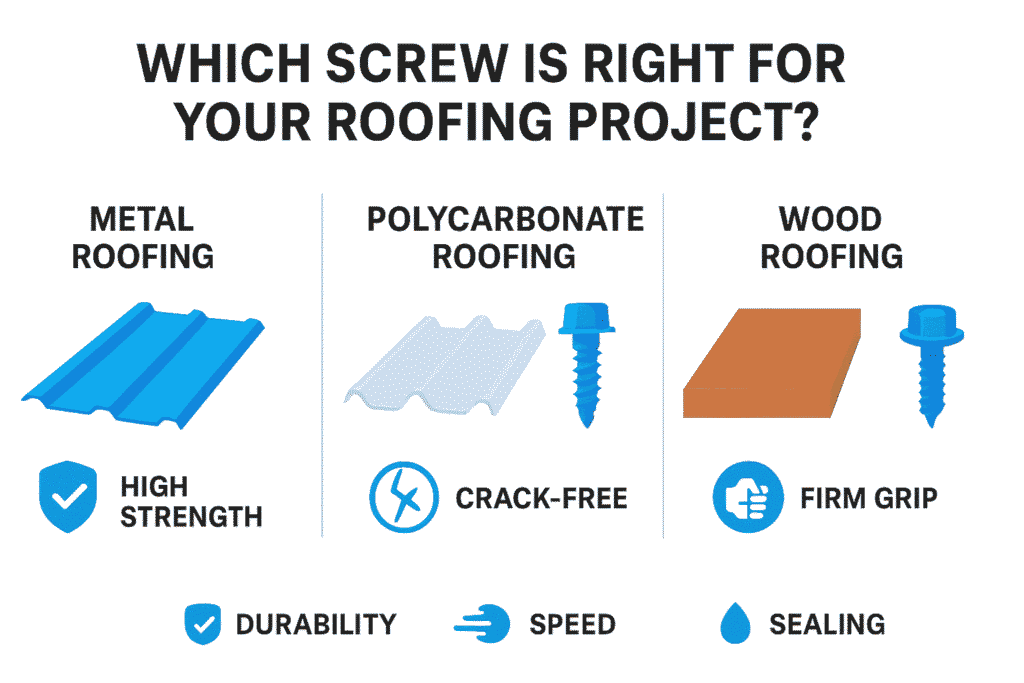
Which Screw Is Better for Roofing Projects? (Expert Recommendations)
Choosing between self-drilling and self-tapping screws depends on the type of roofing material, project scale, and installation conditions. Here’s how professionals decide:
🔩 For Metal Roofing & PEB Structures
Use self-drilling screws — their drill-point tips penetrate steel sheets and purlins in one go, ensuring tight, corrosion-resistant joints.
They save time on large installations and maintain uniform torque, minimizing leaks.
✅ Recommended: Class 3 or Class 4 coated self-drilling screws with EPDM washers — long-lasting and leak-proof.
☀️ For Polycarbonate or Skylight Sheets
Go for self-tapping screws.
They prevent sheet cracking and allow flexible thermal expansion — a must for transparent or brittle materials.
Use them with polycarbonate dome washers for a weather-tight seal.
✅ Recommended: Stainless-steel self-tapping screws with UV-resistant washers.
🪵 For Wooden or Plywood Roof Decks
Use wood screws with a sharp thread and corrosion-resistant coating.
They provide firm grip without splitting the wood and are ideal for fixing metal sheets or brackets to timber structures.
✅ Recommended: Ruspert-coated or zinc-plated wood screws designed for roofing use.
⚙️ Expert Tip:
For large-scale commercial projects, professionals often mix both screw types —
Self-drilling screws for structural joints and self-tapping screws for lightweight or polycarbonate zones.
This ensures both strength and flexibility across the entire roofing system.
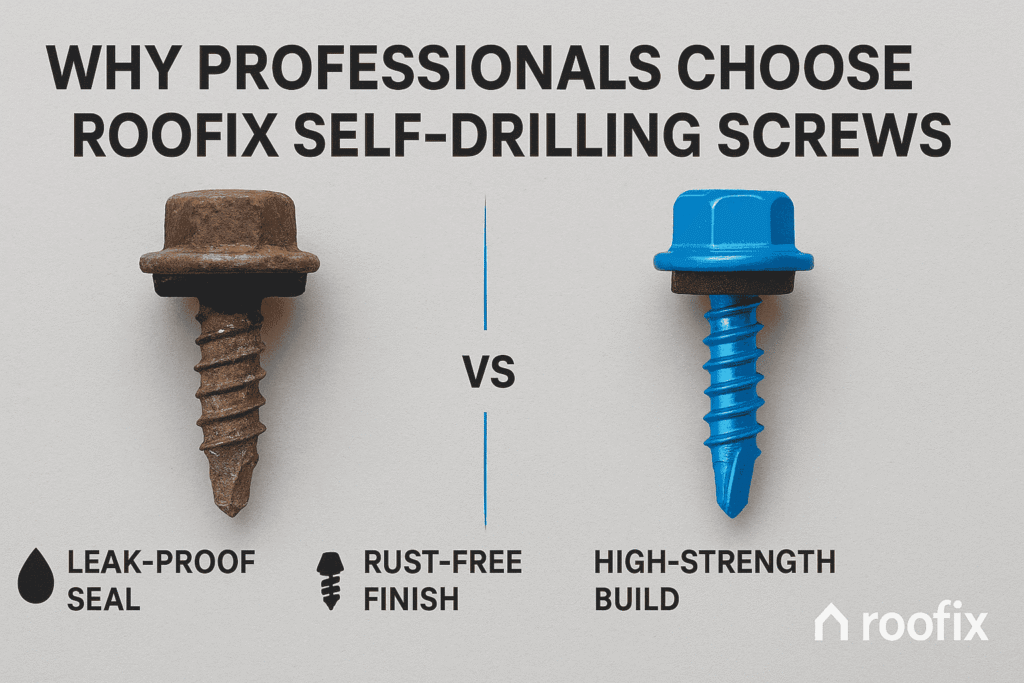
Why Roofix Self-Drilling Screws Are Preferred by Professionals
In roofing and construction, the difference between a short-term fix and a long-lasting roof often comes down to the quality of the fastener.
Roofix self-drilling screws have earned the trust of roofing contractors, PEB manufacturers, and industrial builders because they deliver reliability where it matters most — on-site performance.
Here’s what makes them stand out 👇
🔹 Rust-Proof & Weather-Resistant Coating
Each Roofix screw undergoes Class 3 or Class 4 coating, tested for over 1,000–2,000 hours of salt spray resistance.
That means they stay corrosion-free even in coastal, industrial, or high-humidity climates, preventing rust streaks and roof leaks over time.
🔹 Precision Drill Points
Engineered with self-drilling tips, Roofix screws can penetrate steel up to 12mm without pre-drilling —
ensuring fast, clean, and accurate installations while saving contractors hours of labor on-site.
🔹 Leak-Proof EPDM Washers
Every screw includes UV-stabilized EPDM washers that maintain elasticity even after years of heat exposure.
They form a tight seal under the screw head — keeping out water, dust, and air leaks that commonly damage metal roofs.
🔹 Consistent Quality & Strength
Roofix screws are BIS-certified and manufactured with high-tensile carbon steel, maintaining consistent torque and holding power.
Whether it’s a warehouse, factory, or shed, these fasteners ensure long-term stability and aesthetic finish.
🔹 Wide Range of Options
From fiber cement board screws to polycarbonate roofing screws, and wood or metal screws, Roofix offers a full fastener range —
making it a one-stop brand for all types of roofing installations.
Conclusion – The Right Choice for Leak-Free, Long-Lasting Roofs
When it comes to roofing, even the smallest detail — like the type of screw you choose — can determine whether a roof lasts for years or fails within months.
The comparison between self-drilling and self-tapping screws shows one clear truth:
each has its place, but choosing the right one for your roofing material and environment is key to long-term performance.
If you’re working on metal, fiber cement, or steel structures, self-drilling screws are the smarter, faster, and more reliable option.
For polycarbonate sheets or lighter roofing, self-tapping screws deliver cleaner finishes and prevent damage.
At the end of the day, quality screws protect more than just roofs — they protect your reputation and your client’s investment.
👉 Explore our complete range of roofing fasteners here:
🔗 https://roofix.in/products/
Share on :
Recent posts
Why Screw Coating Matters More Than Sheet Thickness…
Fiber Cement Board Screw Length & Thickness Guide…
Self-Drilling Screw Sizes for Different Sheet Thicknesses (Complete…
Get a free Estimate
Related Posts
Why Screw Coating Matters More Than Sheet Thickness in…
Why Screw Coating Matters More Than Sheet Thickness in Roofing Projects Why Screw Coating Matters…
Fiber Cement Board Screw Length & Thickness Guide (With…
Fiber Cement Board Screw Length & Thickness Guide (With Practical Use Cases) Fiber Cement Board…
Self-Drilling Screw Sizes for Different Sheet Thicknesses (Complete Guide…
Self-Drilling Screw Sizes for Different Sheet Thicknesses (Complete Guide 2026) Self-Drilling Screw Sizes for Different…