

Self-Drilling Screw Sizes for Different Sheet Thicknesses (Complete Guide 2026)
Self-Drilling Screw Sizes for Different Sheet Thicknesses (Complete Guide 2026)
- Roofix
1. Why Screw Size Matters More Than You Think
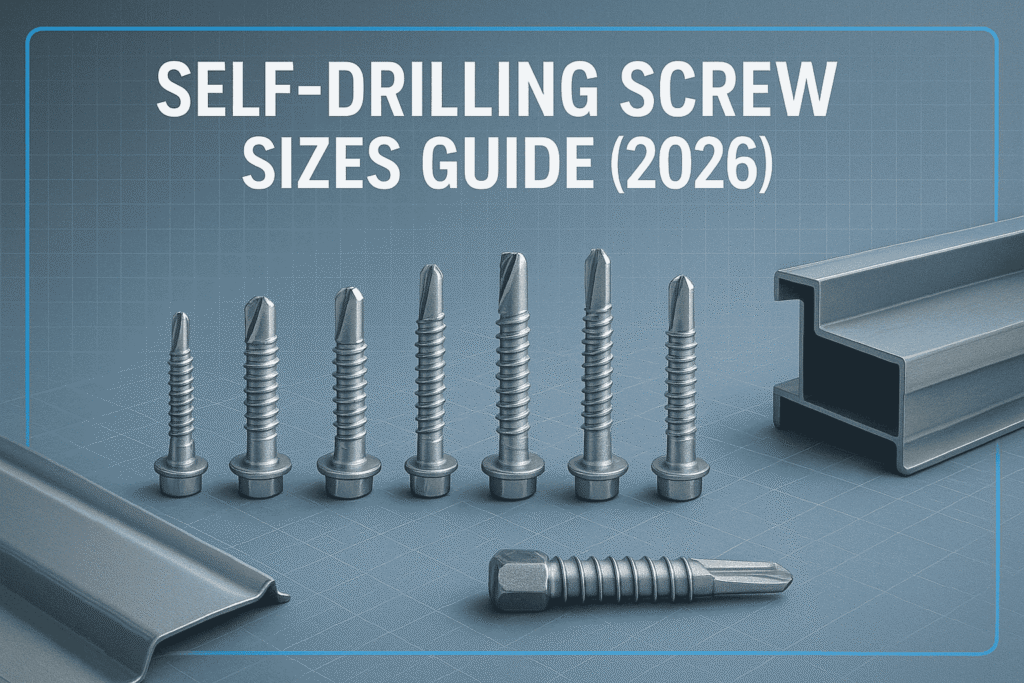
Choosing the right self-drilling screw size is one of the most important decisions in any metal roofing, cladding, or PEB project — yet it’s also the most commonly ignored.
Most failures in roofing aren’t caused by sheets, structure, or workmanship.
They happen because of one simple mistake:
👉 Using the wrong screw size for the sheet thickness.
If the screw is too short, it won’t anchor properly into the purlin.
If it’s too long, it may spin freely or over-drill the steel.
If the drill point is too weak for thick steel, the screw burns out or breaks.
The result?
✔ Leaks
✔ Loose sheets
✔ Early rusting
✔ Vibration noise
✔ Material damage
This is exactly why contractors, fabricators, and PEB builders rely on proper screw sizing for safe, long-lasting installations.
In this guide, we’ll break down:
The correct screw sizes for 0.45mm–12mm steel
Which drill point to use (SD1, SD2, SD3, SD4)
Ideal screw lengths for roofing, cladding & PEB projects
Common mistakes contractors make
A downloadable Roofix screw-size selection reference
By the end, you’ll know exactly which screw to use for which thickness — no guesswork, no failures, and zero callbacks.
2. Understanding Steel Thickness & Drill Point Types (SD1–SD4)
Before selecting the right self-drilling screw size, you must understand two things:
1️⃣ Sheet Thickness (the metal sheet you are drilling through)
2️⃣ Purlin/Girt Thickness (the supporting steel frame)
Together, these determine how long your screw should be and which drill point is required.
Let’s break it down in simple, contractor-friendly terms.
🔹 2.1 What Steel Thickness Really Means (0.45mm–12mm)
Roofing and cladding sheets usually range between 0.40mm and 1mm, while PEB structures can go as high as 12mm (for heavy industrial loads).
Here’s a quick reference:
| Application | Typical Thickness |
|---|---|
| Polycarbonate Sheets | 1–2mm |
| Residential Metal Roofing | 0.40–0.50mm |
| Industrial Metal Roofing | 0.50–0.60mm |
| PEB Cladding Panels | 0.45–0.80mm |
| Light Steel Purlins (C/Z Purlins) | 1.2–2.5mm |
| Heavy Structural Steel | 4–12mm |
Why this matters:
The thicker the steel, the stronger drilling power and length you need.
Using the wrong screw tip = burnt tips, broken screws, or loose grip.
🔹 2.2 Drill Point Types (SD1, SD2, SD3, SD4) — What They’re Made For
Self-drilling screws come with different drilling capacities called SD points.
Let’s simplify:
🔸 SD1 (Light Duty – Roofing Sheets)
Drilling capacity: Up to 2mm
Used for: Polycarbonate, aluminum, thin metal roofing
Best for: Fixing sheets to light purlins
🔸 SD2 (Medium Duty – Purlins & Cladding)
Drilling capacity: 2–4.5mm
Used for: C/Z purlins, intermediate steel
Best for: Typical PEB/industrial uses
🔸 SD3 (Heavy Duty – Thick Steel)
Drilling capacity: 4.5–8mm
Used for: Heavy purlins, thick steel brackets
Best for: Industrial sheds, machinery mounts
🔸 SD4 (Extra Heavy Duty – Structural Steel)
Drilling capacity: 8–12mm
Used for: Structural beams, heavy steel connections
Best for: Load-bearing metal structures
🔹 2.3 Why Drill Point Matters More Than Screw Length
Even a long screw won’t work if the drill tip is too weak.
Example:
Using SD1 on a 4mm purlin = tip burns, screw breaks, hole becomes oversized.
Using SD3 on 0.45mm sheet = over-drilling, spinning, leakage risk.
That’s why matching drill tip with thickness is critical.
3. Recommended Screw Sizes for Each Sheet Thickness
Choosing the correct screw size depends on TWO factors:
1️⃣ Sheet thickness (top material)
2️⃣ Purlin or frame thickness (base material)
To make it simple, here’s the ultimate contractor reference table for selecting the right self-drilling screw length + drill point for 0.45mm to 12mm steel.
🔹 3.1 Master Screw Selection Table (Sheet Thickness → Screw Size)
| Sheet Thickness | Purlin/Frame Thickness | Ideal Screw Length | Recommended Drill Point | Common Use Case |
|---|---|---|---|---|
| 0.40–0.47 mm | 1.2–2 mm | 55mm | SD1 | Residential metal roofing |
| 0.45–0.50 mm | 1.6–2 mm | 55–60mm | SD1 / SD2 | Industrial roofing & cladding |
| 0.50–0.60 mm | 1.6–2.5 mm | 60–65mm | SD2 | Warehouse roofing |
| 0.60–0.80 mm | 1.6–3 mm | 65–75mm | SD2 | PEB side cladding |
| 0.80–1.0 mm | 2–3 mm | 75mm | SD2 | Industrial metal panels |
| 1–2 mm | 3–4.5 mm | 80–90mm | SD2 | Heavy cladding sheets |
| 2–4 mm | 4–6 mm | 90–100mm | SD3 | Purlins & intermediate steel |
| 4–6 mm | 6–8 mm | 100–120mm | SD3 | Steel frames & heavy mounts |
| 6–8 mm | 8–10 mm | 120–150mm | SD4 | Structural steel beams |
| 8–12 mm | 10–12 mm | 150mm+ | SD4 | Heavy structural applications |
🔹 3.2 Easy Rule-of-Thumb for Screw Length
To avoid confusion onsite, remember:
👉 Screw Length = Sheet Thickness + Purlin Thickness + 15–20mm grip buffer
Example:
0.50mm sheet + 2mm purlin + 15mm
= 55mm screw
This simple rule prevents under-gripping and over-drilling.
🔹 3.3 How to Check if Your Screw Is Correct (Quick 5-Second Test)
✔ The screw penetrates the purlin fully
✔ The washer compresses slightly (not crushed)
✔ The drill tip does NOT burn during drilling
✔ No spinning after fixing
✔ Sheet sits flush without gaps
If any of these fail → you are using the wrong tip or wrong length.
4. Common Mistakes When Choosing Self-Drilling Screw Sizes (And How to Avoid Them)
Even experienced contractors and fabricators sometimes make mistakes when selecting self-drilling screw sizes. These errors may look small, but they cause leaks, loose sheets, vibration noise, and even structural issues over time.
Here are the most common sizing mistakes — and how to fix them quickly.
🔹 4.1 Using a Short Screw That Doesn’t Reach the Purlin
This is the #1 mistake on roofing sites.
A screw that is too short:
✘ Doesn’t anchor properly
✘ Pops out during strong wind
✘ Leaves the sheet loose
How to avoid it:
Always add 15–20mm grip buffer when calculating screw length.
🔹 4.2 Using an Oversized Screw “Because It Looks Stronger”
Many installers assume a longer screw = better strength, which is wrong.
A screw that is too long:
✘ Over-drills the purlin
✘ Spinning reduces grip strength
✘ Damages the washer
✘ Increases leakage risk
How to avoid it:
Match screw length exactly to sheet thickness + purlin thickness.
🔹 4.3 Using the Wrong Drill Point (SD1/SD2/SD3/SD4)
This leads to:
– Burnt drill tips
– Misaligned holes
– Snapped screws
– Increased fixing time
Correct match:
SD1 → Thin sheets (up to 2mm)
SD2 → 2–4.5mm
SD3 → 4.5–8mm
SD4 → 8–12mm
🔹 4.4 Ignoring Clamping Thickness
Clamping thickness = total material the screw passes through.
If you don’t calculate this correctly:
✘ Washer won’t seat properly
✘ Roof vibrates during wind
✘ Gaps appear between sheet and purlin
How to avoid it:
Use the thumb rule:
Screw length = Clamping thickness + 15–20mm
🔹 4.5 Using Wood Screws / Drywall Screws as a Replacement
Some contractors use wood screws or drywall screws “temporarily.”
This leads to:
✘ Zero drilling capacity
✘ No corrosion protection
✘ Immediate failure in metal roofing
How to avoid it:
Use Class 3 or Class 4 coated self-drilling screws only.
🔹 4.6 Using Polycarbonate Screws on Metal Sheets
This is common on warehouse skylights.
Polycarbonate screws:
✔ Great for brittle sheets
✘ Not designed for metal
✘ Not the right drill tip
✘ Not the right washer pressure
Correct usage:
Use SD1/SD2 metal-to-metal screws for metal sheets
Use polycarbonate screws only for polycarbonate roofing
🔹 4.7 Not Checking the Screw’s Grip After Installation
Even if size is correct, improper fixing causes failures.
Checklist:
✔ Washer slightly compressed
✔ No over-tightening
✔ No spinning/stripping
✔ Sheets sit flat
5. How to Choose the Right Screw Size for Your Roofing or PEB Project (Easy Guide)
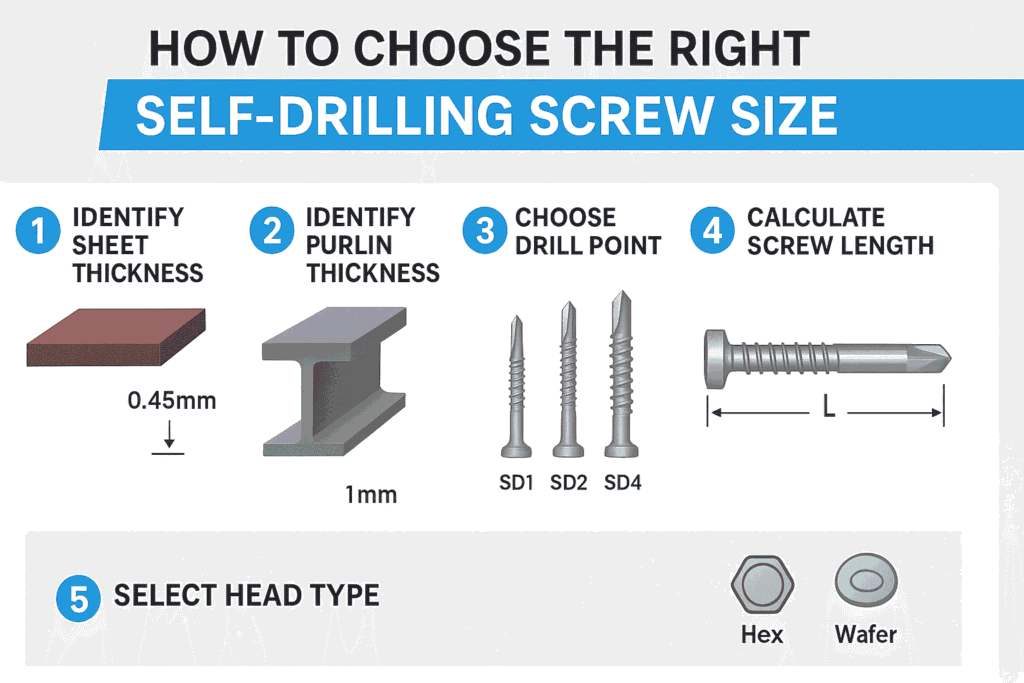
Selecting the correct screw size doesn’t have to be complicated.
Here is a simple step-by-step process used by professional contractors, PEB builders, and metal roofing installers across India.
Follow these 5 steps and you will NEVER pick the wrong screw again.
🔹 5.1 Step 1 — Identify Your Sheet Thickness
This is your starting point.
Common roofing sheet thicknesses:
0.45mm – 0.47mm (residential / standard industrial)
0.50mm – 0.60mm (high wind load areas)
0.60mm – 0.80mm (industrial cladding)
Polycarbonate sheets: 1mm–2mm
✔ Write down the exact sheet thickness.
🔹 5.2 Step 2 — Check the Thickness of the Purlin or Steel Structure
This is the second most important factor.
Typical purlin/structural steel thickness:
1.2mm – 2.5mm (C/Z purlins)
4–6mm (intermediate steel)
8–12mm (heavy structural steel in PEB)
✔ Measure or confirm with the site engineer.
🔹 5.3 Step 3 — Choose the Correct Drill Point (SD1–SD4)
| Steel Thickness | Correct Drill Point |
|---|---|
| 0–2mm | SD1 |
| 2–4.5mm | SD2 |
| 4.5–8mm | SD3 |
| 8–12mm | SD4 |
✔ Never use a lower drill point on thicker steel — it burns the tip.
✔ Never use a higher drill point on thin sheet — it over-drills and reduces grip.
🔹 5.4 Step 4 — Calculate the Screw Length (Simple Formula)
Formula:
Screw Length = Sheet Thickness + Purlin Thickness + 15–20mm grip
Example:
0.50mm sheet + 2mm purlin + 15mm grip
= 55mm screw
This is the fastest, most reliable sizing rule.
🔹 5.5 Step 5 — Choose the Head Type Based on Application
✔ Hex Head (Most Common)
Best for:
Metal roofing
PEB structures
High-strength installation
✔ Wafer Head / Truss Head
Best for:
Stitching
Side-lap fixing
Light sheet-to-sheet fastening
✔ Countersunk Head (CSK)
Best for:
Flush finishing
Wooden surfaces
Interior applications
Selecting both the correct length + head type ensures proper sealing and stability.
🔹 5.6 Bonus: Always Use Screws With EPDM Washers for Roofing
Because EPDM:
✔ Resists UV & heat
✔ Doesn’t crack
✔ Maintains seal for years
✔ Prevents leaks
Avoid cheap rubber washers — they dry, crack, and cause leakage.
6. Why Roofix Self-Drilling Screws Are Trusted by Contractors Across India
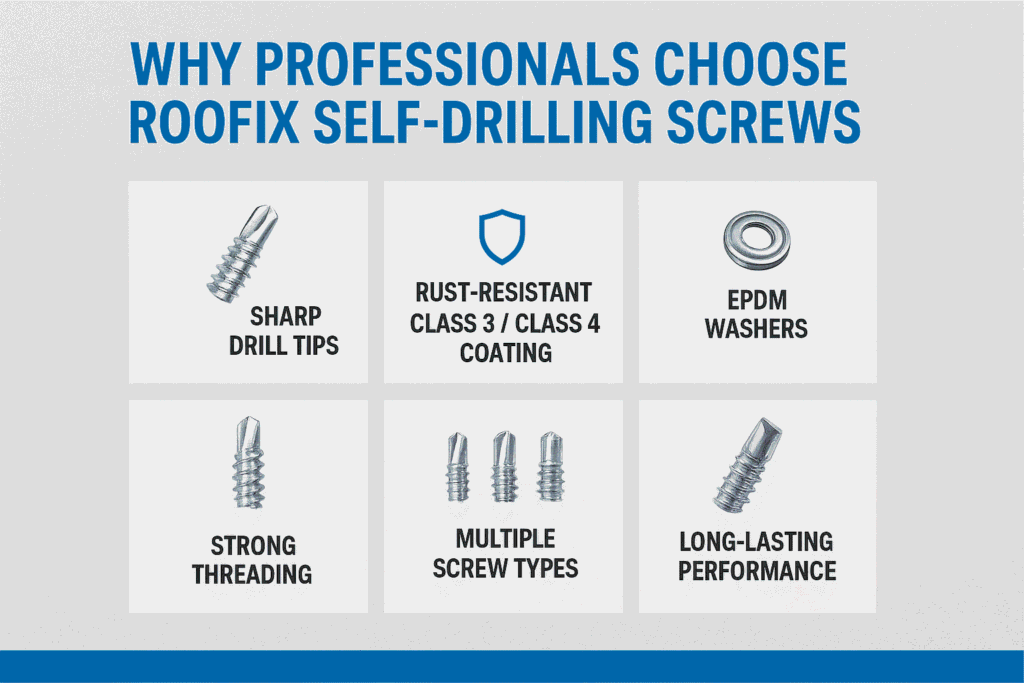
Contractors, fabricators, and PEB builders work in tough environments—high heat, heavy winds, monsoon rain, chemical exposure, and constant vibration.
In these real conditions, the quality of the screw decides whether a roof lasts 20 years or starts leaking in 6 months.
Here’s why Roofix self-drilling screws consistently perform better on Indian sites.
🔹 6.1 Heavy-Duty Drill Tips for Faster, Cleaner Penetration
Roofix screws are engineered with precision-formed SD tips that deliver:
✔ Faster drilling
✔ No burning of tip
✔ Clean, round holes
✔ Reduced installation time
Whether you’re drilling through 0.45mm sheets or 12mm steel, the drill points stay sharp and consistent.
🔹 6.2 Class 3 & Class 4 Coatings for Long-Term Rust Protection
Corrosion is the biggest enemy of roofing screws.
Roofix uses high-grade metallic coatings tested for performance in Indian climates.
Benefits:
✔ Withstands monsoons
✔ Resists coastal humidity
✔ Prevents red rust & white rust
✔ Extends roof life
You get stronger, longer-lasting joints with minimal maintenance.
🔹 6.3 High-Quality EPDM Washers for Zero Leakage
Cheap rubber washers crack under heat.
Roofix uses UV-resistant EPDM washers that maintain elasticity for years.
This ensures:
✔ Tight sealing
✔ No water seepage
✔ Better vibration absorption
✔ Long-term leak protection
🔹 6.4 Consistent Thread Geometry for Increased Grip
Every screw is manufactured with:
✔ Uniform thread pitch
✔ Sharp thread edges
✔ Balanced thread height
This results in:
✔ Stronger hold
✔ No slipping
✔ No spinning after fixing
Especially important for high-wind zones and industrial sheds.
🔹 6.5 Wide Range of Screw Options for Every Project
Roofix offers screws suitable for:
Metal-to-metal fixing
Metal-to-wood fixing
Polycarbonate sheets
Stitch screws
Wafer head screws
CSK screws
SD1 / SD2 / SD3 / SD4 drill points
Multiple lengths (19mm to 150mm+)
You can pick the exact specification your project needs.
🔹 6.6 Trusted by Contractors, Distributors & PEB Companies
Across India, professionals choose Roofix because:
✔ Screws don’t break
✔ Drilling is smooth
✔ Coating lasts
✔ No leakage callbacks
✔ Supply is reliable
✔ B2B support is excellent
Good screws save time, prevent rework, and protect your reputation.
That’s why Roofix is becoming a preferred brand for metal roofing fasteners.
7. Conclusion — Choosing the Right Screw Size Ensures a Stronger, Leak-Free Roof
Selecting the correct screw size isn’t just a small technical detail — it determines whether your roofing system stays stable, rust-free, and leak-proof for years. The sheet thickness, purlin thickness, material type, and application all influence which screw size will perform the way your project demands.
Self-drilling screws are engineered to deliver strong holding power, faster installation, and consistent performance — but only when you choose:
✔ the correct drill point (SD1–SD4)
✔ the right length for proper penetration
✔ the appropriate head type
✔ a durable coating class
✔ a reliable washer
When these factors align, you get a roof that:
🔹 Stays tight in strong winds
🔹 Resists monsoon leakage
🔹 Avoids rust and corrosion
🔹 Reduces repair and callback costs
🔹 Performs reliably for 10–20+ years
In roofing, a screw isn’t just a screw — it’s the small component that holds your client’s entire structure together.
Explore High-Performance Self-Drilling Screws
If you want screws engineered for durability, precision, and stable performance across Indian roofing conditions, explore our complete range here: Roofix Products
Share on:
Get a free Estimate
Recent posts
Hex Head Socket for Roofing Screws: What It…
Roofing Sealants Explained: Types, Uses & How to…

EPDM Washer in Roofing Screws: Why It Matters…
Related Posts
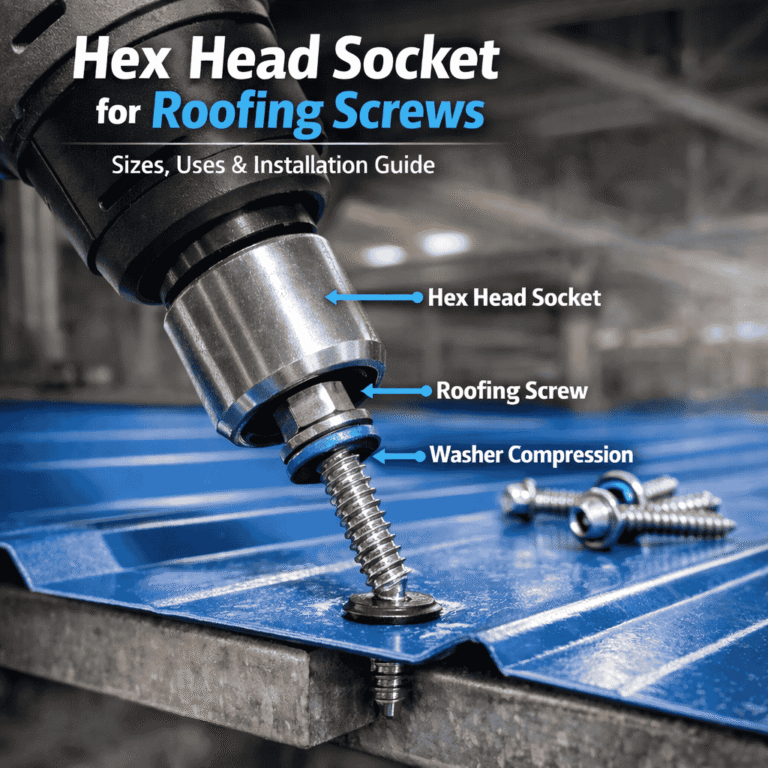
Hex Head Socket for Roofing Screws: What It Is…
Hex Head Socket for Roofing Screws: What It Is and Why Installers Use It Hex…
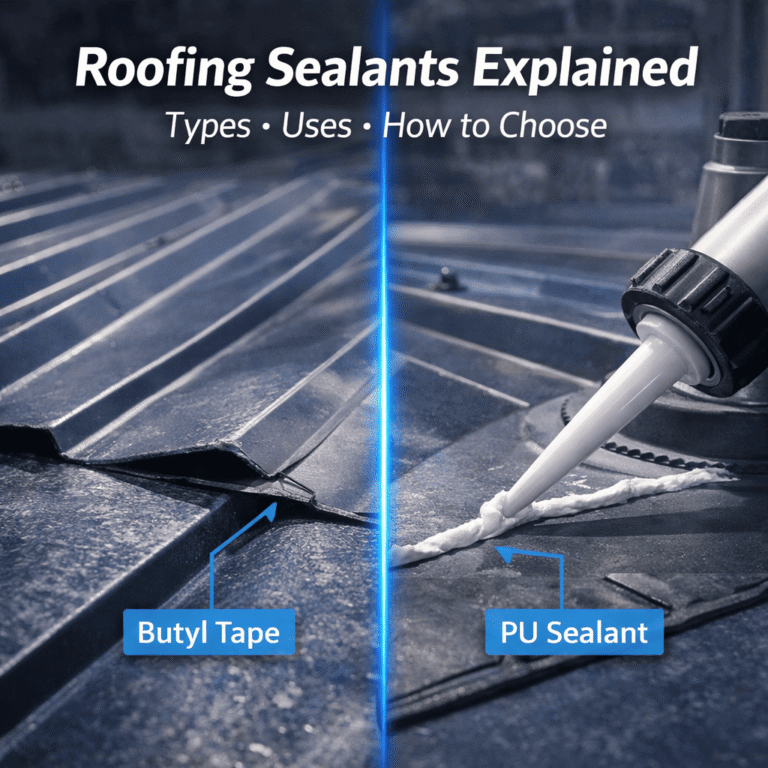
Roofing Sealants Explained: Types, Uses & How to Choose…
Roofing Sealants Explained: Types, Uses & How to Choose the Right One Roofing Sealants Explained:…
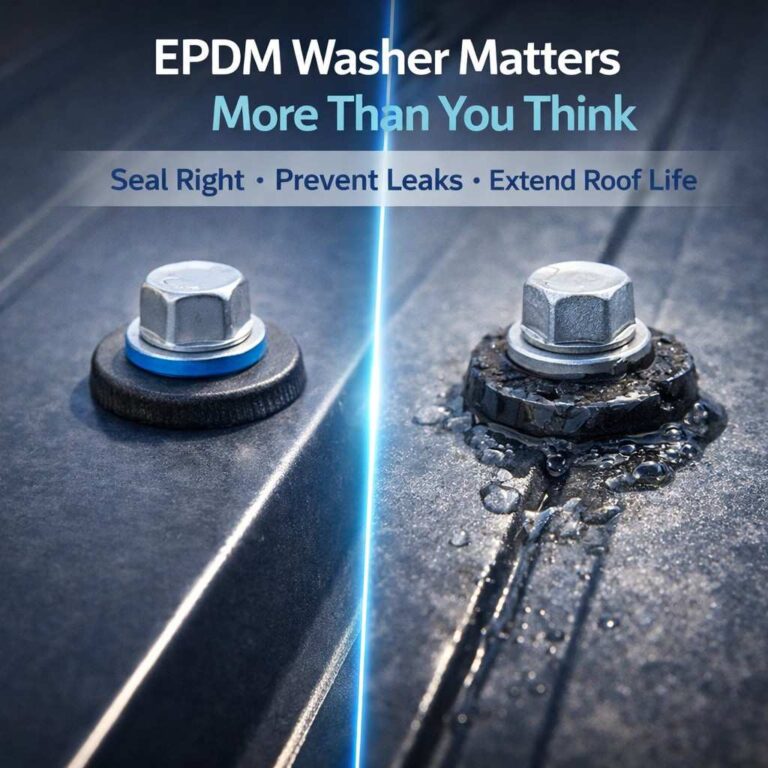
EPDM Washer in Roofing Screws: Why It Matters More…
EPDM Washer in Roofing Screws: Why It Matters More Than You Think EPDM Washer in…
