

Screw Length & Diameter Selection Guide for Roofing Applications
Screw Length & Diameter Selection Guide for Roofing Applications
- Jatin Banga
Why Screw Size Matters in Roofing Applications
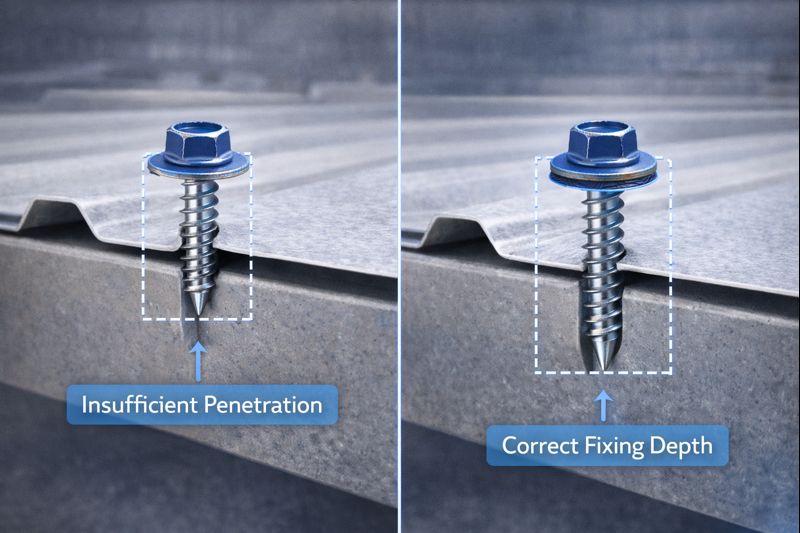
In roofing systems, attention is often given to sheet thickness, profile design, and waterproofing layers. However, screw size—specifically length and diameter—is one of the most common causes of early roofing failures when selected incorrectly.
A screw that is too short may not achieve adequate penetration into the supporting substrate, leading to pull-out under wind uplift or vibration. On the other hand, an oversized or unnecessarily long screw can create excessive stress around the fixing point, increasing the risk of sheet deformation, washer damage, and long-term leakage.
Unlike visible roofing components, fasteners carry hidden structural responsibility. They are expected to hold sheets in place, maintain sealing pressure, and accommodate thermal movement—often for decades—without adjustment.
This is why selecting the correct screw length and diameter is not just a specification detail. It directly affects roof stability, waterproofing performance, and service life, especially in industrial and commercial roofing applications.
Understanding Screw Length in Roofing Applications
Screw length in roofing is not decided by sheet thickness alone. A properly selected roofing screw must pass through every layer of the roof assembly and still achieve sufficient anchoring into the supporting structure.
In most roofing systems, the screw travels through:
Roofing sheet or panel
Washer and sealing layer
Optional insulation or spacer
Structural substrate (steel, wood, or concrete)
The functional length of a roofing screw is the portion that remains embedded in the substrate after passing through the top layers. If this embedded length is insufficient, the screw may hold initially but can loosen over time due to vibration, wind uplift, or thermal expansion.
At the same time, excessive length does not improve performance. Over-penetration can:
Increase installation torque unnecessarily
Damage threads during driving
Create bending stress at the fixing point
The goal is balanced penetration—enough to ensure holding strength and stability, without introducing stress or installation issues.
Understanding this balance is the foundation for selecting the correct screw length for any roofing application.
How to Select the Right Screw Length (Practical Guide)
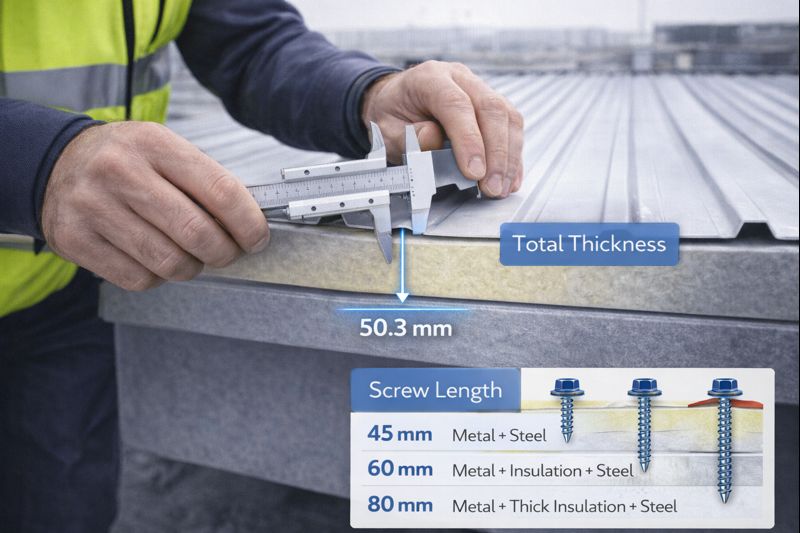
Choosing the correct screw length becomes straightforward when approached systematically. Instead of relying on standard sizes or past habits, screw length should be selected based on the actual roof build-up.
Step-by-step approach
Measure the total thickness above the substrate
Include:Roofing sheet thickness
Washer and sealing layer
Insulation or spacer (if used)
Identify the substrate type
Steel, wood, and concrete require different minimum embedment depths.Ensure minimum effective penetration
The screw must penetrate the substrate enough to resist:Wind uplift
Vibration
Thermal movement
As a general guideline:
Steel substrates require adequate thread engagement beyond the sheet
Wood requires deeper penetration for holding strength
Concrete or RCC requires sufficient anchoring length for load transfer
Typical Roofing Setups & Screw Length Selection
| Roofing Application | Typical Roof Build-Up | Recommended Screw Length Range |
|---|---|---|
| Metal sheet to steel purlin | Sheet + washer | 25–35 mm |
| Metal sheet with insulation | Sheet + insulation + washer | 45–75 mm |
| Sheet to wooden purlin | Sheet + washer | 35–50 mm |
| Fiber cement board fixing | Board + washer | 38–50 mm |
These ranges are indicative. Final selection should always account for project load requirements and substrate condition.
Using this method ensures consistent holding strength without over-stressing the fixing point.
Understanding Screw Diameter & Why It Matters
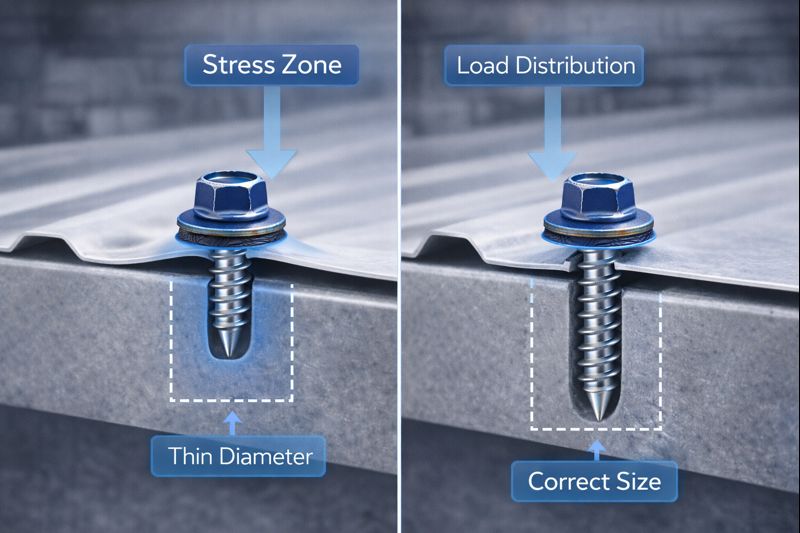
While screw length determines anchoring depth, screw diameter controls load distribution and long-term stability at the fixing point.
A screw with an undersized diameter may penetrate correctly but still fail under:
Wind uplift
Sheet movement due to thermal expansion
Vibration from machinery or foot traffic
On the other hand, using an oversized diameter does not always improve performance. Larger diameters can:
Increase stress around the hole
Crack brittle materials like fiber cement boards
Distort metal sheets if over-tightened
Where Diameter Makes the Biggest Difference
Thin metal sheets: Diameter affects pull-through resistance
High-wind zones: Wider load distribution reduces localized stress
Fiber cement boards: Correct diameter prevents edge cracking
In roofing systems, diameter selection is about balancing holding strength with material compatibility, not simply choosing the thickest option available.
Matching Length & Diameter to Roofing Substrates
Roofing fasteners perform differently depending on the substrate they anchor into. The same screw size cannot deliver consistent results across steel, wood, and cementitious bases.
Selecting the right combination of length and diameter ensures holding strength without damaging the substrate.
How Substrate Affects Screw Selection
-
Steel Purlins:
Require precise thread engagement. Excessive length adds no benefit, while insufficient diameter reduces pull-out resistance. -
Wooden Purlins:
Need deeper penetration due to lower density. Diameter must be balanced to avoid splitting the wood. -
Fiber Cement Boards:
Sensitive to both diameter and over-penetration. Controlled diameter and moderate length prevent cracking and edge failure.
Recommended Screw Selection by Substrate
| Substrate Type | Minimum Effective Penetration | Preferred Diameter Range | Key Consideration |
|---|---|---|---|
| Steel (light gauge) | 6–8 mm into steel | 4.8–5.5 mm | Thread engagement is critical |
| Steel (heavy gauge) | 8–10 mm into steel | 5.5–6.3 mm | Higher torque resistance needed |
| Wood purlins | 20–25 mm into wood | 5.0–6.0 mm | Avoid wood splitting |
| Fiber cement boards | Controlled depth | 4.8–5.5 mm | Prevent cracking & stress |
Matching screw geometry to the substrate ensures:
-
Stable load transfer
-
Reduced loosening over time
-
Longer roofing system life
This is why standardized fastener selection is critical in professional roofing projects.
Common Mistakes While Choosing Screw Size
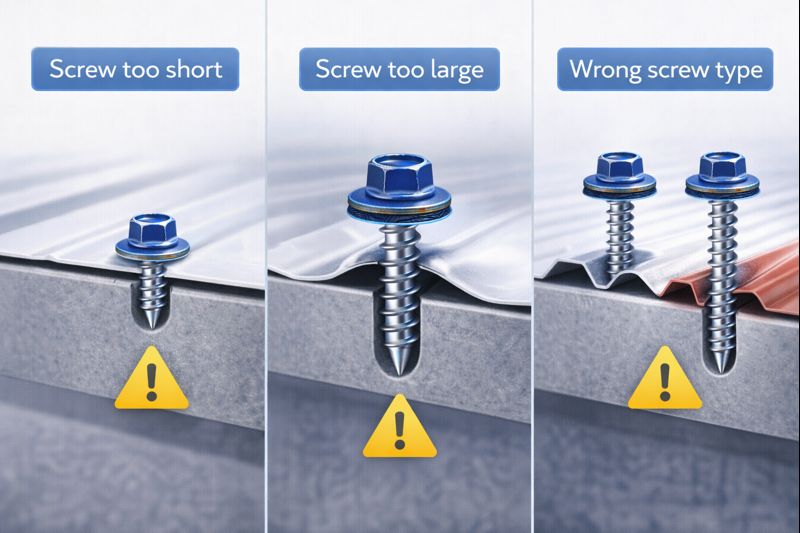
One of the most common mistakes in roofing is choosing screws that are too short. While they may feel secure during installation, insufficient penetration into the substrate leads to loosening over time due to wind loads, vibration, and thermal movement.
Another frequent error is using an over-sized diameter under the assumption that thicker means stronger. In reality, excessive diameter can deform metal sheets, crack fiber cement boards, or create stress zones around fixing points that later turn into leak paths.
Perhaps the biggest mistake is using the same screw size for every roof. Roofing systems vary widely in sheet profile, substrate material, insulation thickness, and exposure conditions. A screw that performs well on one project can fail silently on another.
Correct screw sizing is not about convenience — it’s about compatibility, performance, and long-term reliability.
Final Tip: Size Decisions Should Be System-Level, Not Habit-Based
Choosing the right screw size is not an isolated decision — it’s part of the entire roofing system. Sheet profile, substrate type, washer design, and coating performance all influence long-term results. Before finalizing fasteners, teams should clearly understand how self tapping screws work in different materials, how they compare with self drilling screws, and why screw coating plays a critical role in corrosion resistance.
For deeper technical clarity, refer to:
Standardized knowledge leads to consistent performance.
Share on:
Recent posts

Hex Head Socket for Roofing Screws: What It…
Roofing Sealants Explained: Types, Uses & How to…

EPDM Washer in Roofing Screws: Why It Matters…
Get a free Estimate
Related Posts
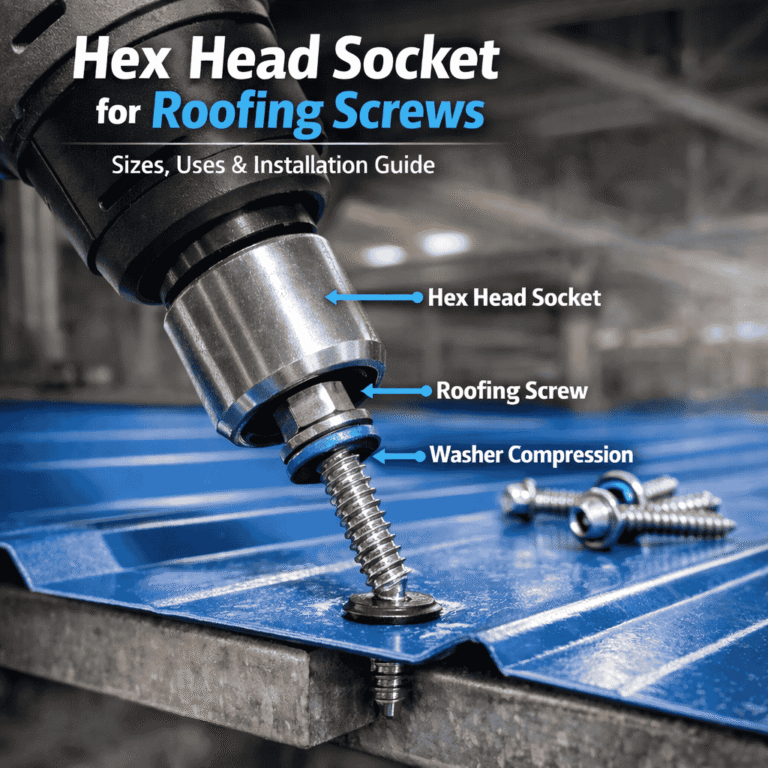
Hex Head Socket for Roofing Screws: What It Is…
Hex Head Socket for Roofing Screws: What It Is and Why Installers Use It Hex…
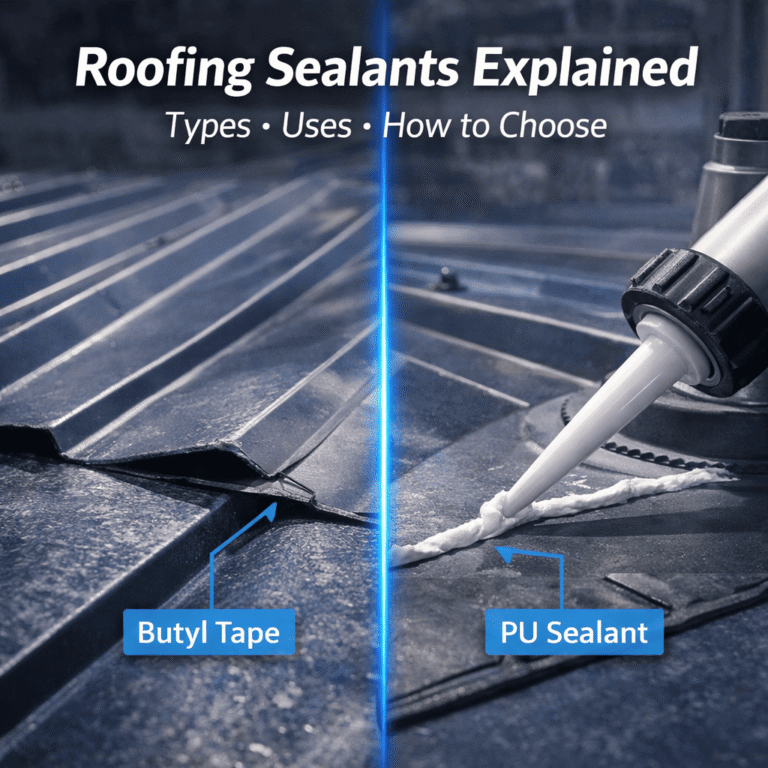
Roofing Sealants Explained: Types, Uses & How to Choose…
Roofing Sealants Explained: Types, Uses & How to Choose the Right One Roofing Sealants Explained:…

EPDM Washer in Roofing Screws: Why It Matters More…
EPDM Washer in Roofing Screws: Why It Matters More Than You Think EPDM Washer in…
