

Roofing Sealants Explained: Types, Uses & How to Choose the Right One
Roofing Sealants Explained: Types, Uses & How to Choose the Right One
- Jatin Banga
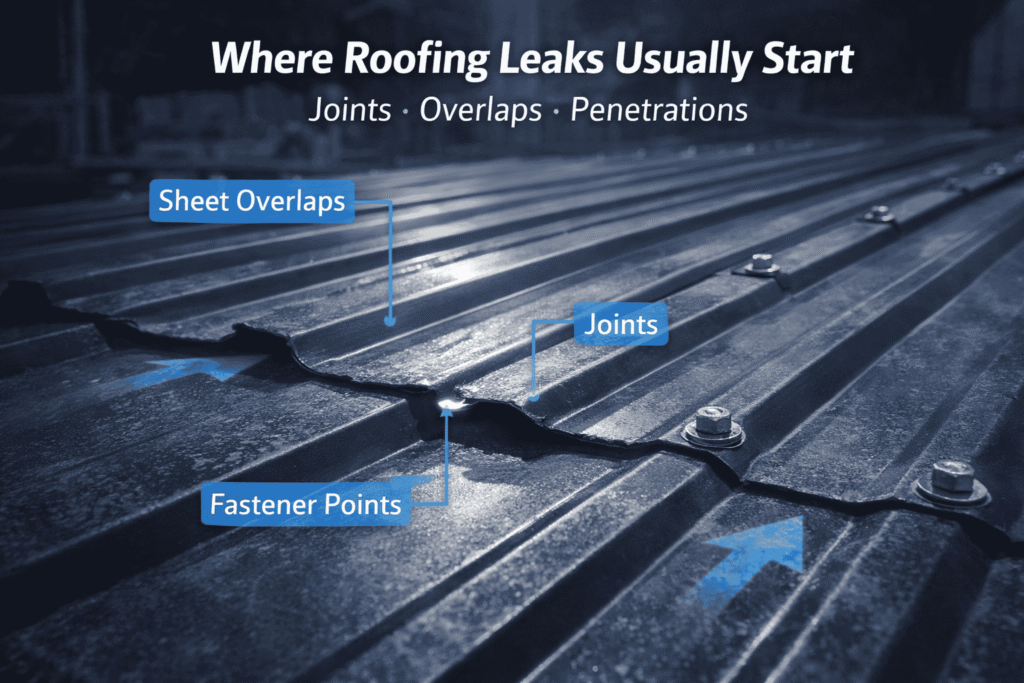
In metal roofing systems, leaks rarely start from the sheets themselves. Most issues begin at joints, overlaps, and penetration points where different components meet. These areas are more vulnerable to water entry, especially under changing weather conditions and thermal movement.
This is where roofing sealants play an important role. They help close small gaps, support waterproofing at critical joints, and improve the overall reliability of the roofing system. While fasteners provide structural holding, sealants act as a protective layer that helps prevent water ingress at connection points.
However, not all sealants are used in the same way. Different roofing applications require different types of sealants based on the surface, joint type, and exposure conditions. Understanding where and how to use them correctly is essential for achieving long-term roof performance.
What Are Roofing Sealants?
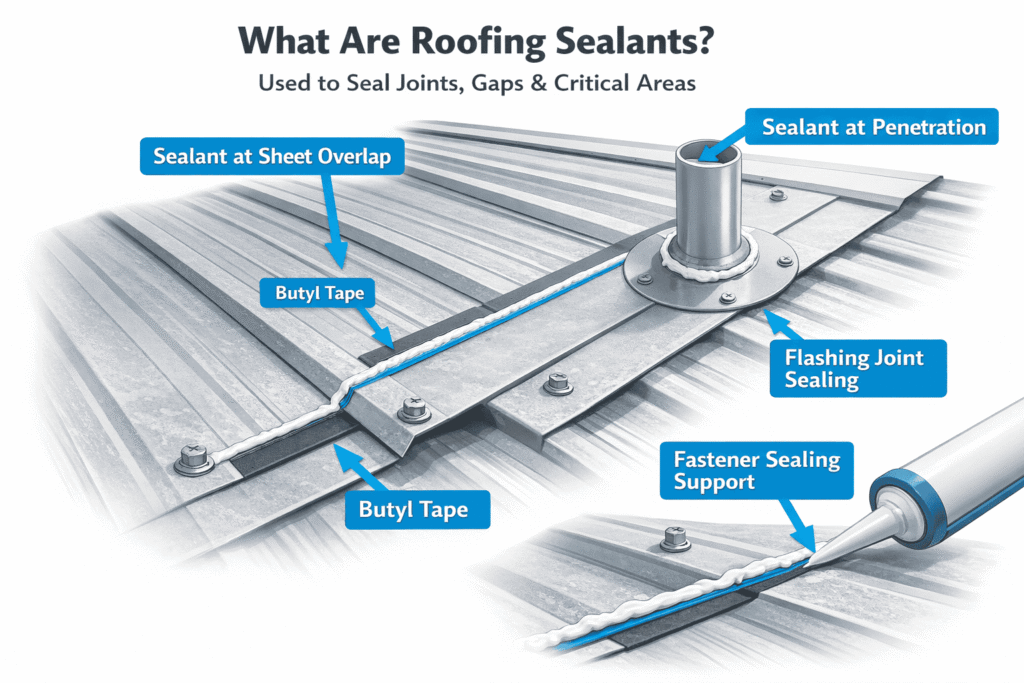
Roofing sealants are materials used to fill gaps, seal joints, and prevent water from entering critical areas of a roofing system. In metal roofing, they are typically applied at connection points where sheets overlap or where components meet.
Unlike fasteners, which provide structural strength, sealants are primarily used for waterproofing and sealing performance. They help block moisture from entering through small openings that can develop due to installation gaps, surface irregularities, or thermal movement.
Sealants are commonly used in areas such as:
• sheet side laps and end laps
• roof penetrations (pipes, vents, fixtures)
• flashing joints and edges
• around fasteners where additional sealing is needed
Because roofing systems are exposed to sun, rain, and temperature changes, sealants must be able to adapt to movement and maintain their sealing ability over time.
Choosing the right sealant and applying it correctly helps improve the overall durability and leak resistance of the roof.
Types of Roofing Sealants Used in Metal Roofing
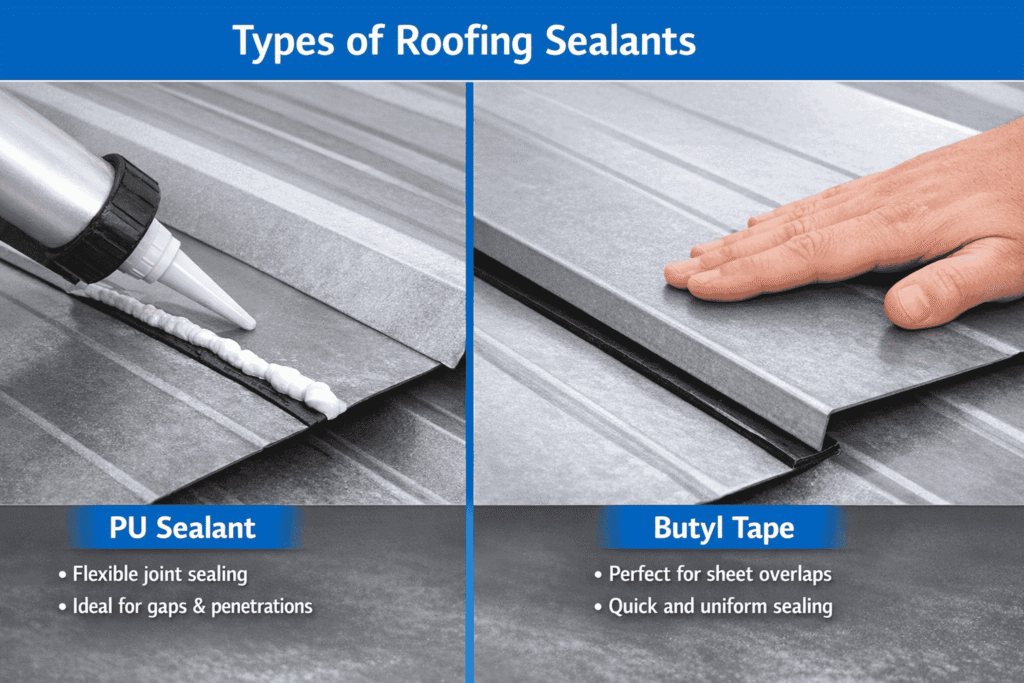
Different roofing applications require different types of sealants. In metal roofing, the two most commonly used options are PU sealant and butyl tape. Each serves a specific purpose based on the type of joint, surface condition, and installation requirement.
Understanding how they differ helps in selecting the right sealant for better sealing performance and durability.
PU Sealant (Polyurethane Sealant)
PU sealant is a flexible, paste-like material used for sealing joints, gaps, and irregular surfaces. It is applied using a sealant gun and forms a strong, elastic bond after curing.
Where it is commonly used:
• sealing gaps between metal sheets
• around roof penetrations (pipes, vents)
• flashing joints and edges
• uneven or irregular surfaces
Key characteristics:
• high flexibility to handle movement
• strong adhesion to metal surfaces
• suitable for dynamic joints
• adapts to temperature expansion and contraction
Butyl Tape
Butyl tape is a pre-formed sealing tape that comes in rolls and is applied between overlapping surfaces. It provides instant sealing without the need for curing.
Where it is commonly used:
• sheet side laps
• end lap joints
• metal-to-metal overlaps
• cladding overlaps
Key characteristics:
• easy and quick to apply
• provides uniform sealing across the joint
• remains tacky and flexible over time
• ideal for flat, consistent surfaces
Quick Comparison
| Feature | PU Sealant | Butyl Tape |
|---|---|---|
| Form | Paste (applied with gun) | Pre-formed tape |
| Best For | Gaps, joints, penetrations | Sheet overlaps |
| Surface Type | Uneven or irregular | Flat and consistent |
| Application | Requires curing | Instant sealing |
| Flexibility | High | Moderate |
Both sealants play an important role in roofing systems, but they are not interchangeable. Using the right type at the right location ensures better sealing performance and reduces the chances of leakage over time.
Where Sealants Are Used in Roofing
In metal roofing systems, sealants are applied at specific locations where there is a higher risk of water entry. These areas typically involve joints, overlaps, and transitions between components.
Using sealants correctly at these points helps improve waterproofing and supports the overall performance of the roof.
Below are the most common areas where sealants are used on-site:
Common Application Areas
• Sheet Side Laps
Sealants (typically butyl tape) are applied between overlapping sheets to prevent water from entering through horizontal joints.
• End Lap Joints
At sheet end overlaps, sealants help create a continuous barrier against water flow, especially in sloped roofs.
• Roof Penetrations
Areas around pipes, vents, ducts, and fixtures require PU sealant to fill gaps and seal irregular shapes.
• Flashing Joints
Sealants are used where flashing meets roofing sheets or walls to prevent leakage at edges and transitions.
• Around Fasteners (Support Use)
In some cases, sealant is used as an additional layer of protection around fastener points, especially in critical areas.
Why Placement Matters
Sealants are effective only when used at the right locations. Applying them randomly or in unnecessary areas does not improve waterproofing and can sometimes create maintenance issues.
A targeted approach ensures that sealants support the roofing system where they are actually needed.
How to Choose the Right Roofing Sealant
Selecting the right roofing sealant depends on where it will be used and the type of surface involved. Using the wrong sealant for an application can reduce effectiveness and lead to leakage over time.
Instead of choosing based on availability, it’s better to match the sealant type with the specific roofing condition.
Quick Selection Guide
| Application Area | Recommended Sealant | Why It Works |
|---|---|---|
| Sheet side laps | Butyl Tape | Provides uniform sealing between flat overlapping sheets |
| End lap joints | Butyl Tape | Ensures continuous sealing along horizontal overlaps |
| Gaps & joints | PU Sealant | Fills irregular spaces and creates a flexible seal |
| Roof penetrations | PU Sealant | Adapts to uneven shapes like pipes and fixtures |
| Flashing edges | PU Sealant | Bonds well at edges and transitions |
| Metal-to-metal flat overlap | Butyl Tape | Maintains consistent thickness and sealing |
Key Factors to Consider
• Surface Type
Flat surfaces work better with butyl tape, while uneven areas require PU sealant.
• Movement & Expansion
Areas exposed to thermal expansion need flexible sealants like PU.
• Application Method
If quick and uniform application is needed, butyl tape is more suitable. For detailed sealing, PU sealant is preferred.
• Exposure Conditions
Outdoor roofing requires sealants that can handle heat, moisture, and weather changes over time.
Practical Tip
Using both sealants in the same project is common. For example:
• butyl tape for sheet overlaps
• PU sealant for penetrations and joints
This combination helps ensure complete sealing coverage across different roofing conditions.
Common Mistakes When Using Sealants
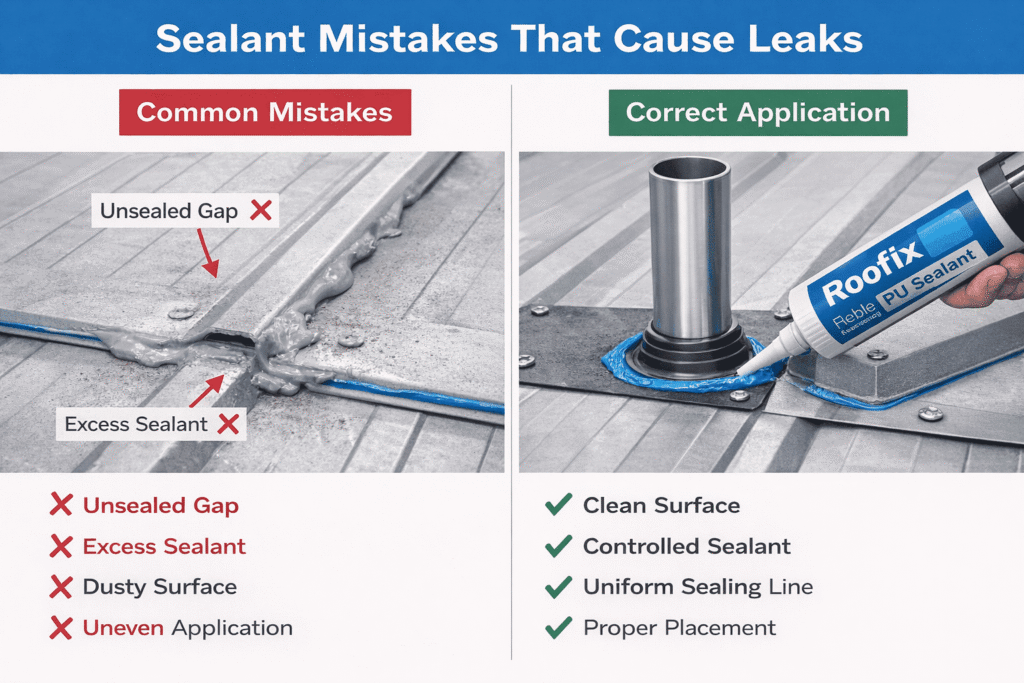
Even with the right materials, improper usage of sealants can lead to poor sealing performance and eventual leakage. Most issues on-site are not due to the product itself, but how it is applied.
Here are some common mistakes to avoid:
Frequent On-Site Mistakes
• Using the Wrong Type of Sealant
Applying butyl tape in gaps or using PU sealant for flat overlaps can reduce effectiveness.
• Poor Surface Preparation
Dust, oil, or moisture on the surface can prevent proper adhesion, leading to early failure.
• Over-Application of Sealant
More sealant does not mean better sealing. Excess material can create uneven joints and messy finishes.
• Under-Application or Gaps in Sealing
Incomplete application can leave small openings where water can enter.
• Relying Only on Sealant for Waterproofing
Sealants are meant to support the system, not replace proper fastening and installation.
• Ignoring Material Behavior
Not considering expansion, contraction, or surface movement can cause the seal to break over time.
Why This Matters
Sealants perform best when they are used correctly and in the right locations. Avoiding these mistakes helps ensure:
• better sealing performance
• longer durability
• reduced maintenance issues
Roofix Sealant Solutions
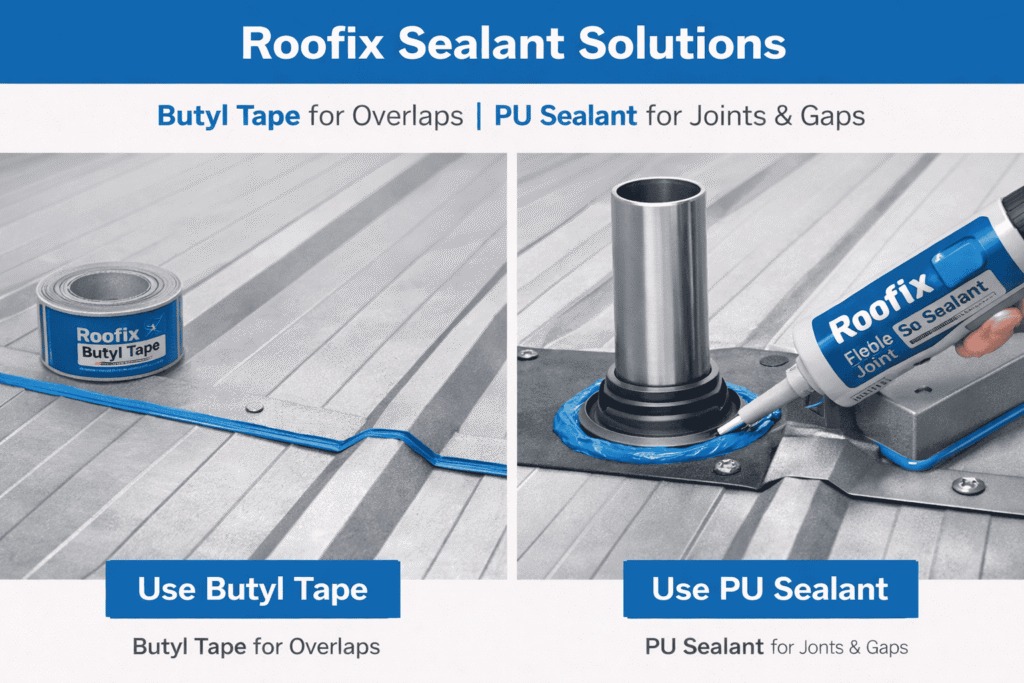
For roofing applications, consistency in materials is as important as correct installation. Using sealants that are specifically suited for metal roofing helps ensure better compatibility and long-term performance.
Roofix offers sealant solutions designed to match common roofing requirements:
• Butyl Tape – suitable for sheet overlaps and metal-to-metal joints where uniform sealing is required
• PU Sealant – used for joints, gaps, penetrations, and areas that require flexibility
These products are selected to support typical roofing applications where reliable sealing is needed across different conditions.
The focus is not just on availability, but on providing materials that maintain consistent quality, ease of application, and predictable performance on-site.
When used in the right locations, these sealants help improve the overall sealing efficiency of the roofing system.
Conclusion
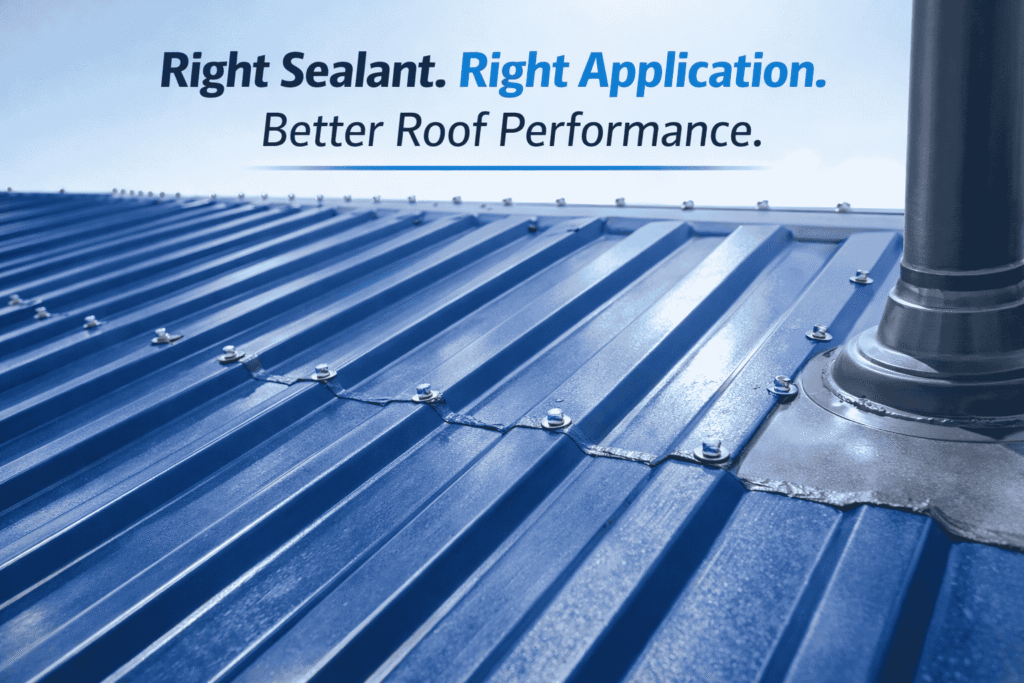
Roofing sealants play a critical role in preventing leaks, especially at joints, overlaps, and penetration points where water is most likely to enter. While they are not a substitute for proper installation, they act as an essential layer of protection that supports the overall roofing system.
Using the right sealant in the right location makes a significant difference. Butyl tape works best for consistent overlaps, while PU sealant is more suitable for joints, gaps, and irregular areas. Understanding this distinction helps avoid common application errors and improves long-term performance.
In roofing, reliability comes from correct material selection and proper usage — not excess application or shortcuts. A well-sealed roof is the result of informed decisions at every critical point.
Share on:
Recent posts

Hex Head Socket for Roofing Screws: What It…

Roofing Sealants Explained: Types, Uses & How to…

EPDM Washer in Roofing Screws: Why It Matters…
Get a free Estimate
Related Posts
Hex Head Socket for Roofing Screws: What It Is…
Hex Head Socket for Roofing Screws: What It Is and Why Installers Use It Hex…
Roofing Sealants Explained: Types, Uses & How to Choose…
Roofing Sealants Explained: Types, Uses & How to Choose the Right One Roofing Sealants Explained:…
EPDM Washer in Roofing Screws: Why It Matters More…
EPDM Washer in Roofing Screws: Why It Matters More Than You Think EPDM Washer in…
