

How EPC Projects Standardize Roofing Fasteners for Large Industrial Developments
How EPC Projects Standardize Roofing Fasteners for Large Industrial Developments
- Jatin Banga
Why Fastener Standardization Matters in EPC Projects
In large EPC (Engineering, Procurement, and Construction) projects, roofing fasteners may appear to be a minor component, but they play a critical role in long-term structural performance, waterproofing, and maintenance costs. When projects span multiple locations, contractors, and timelines, inconsistency in fastener selection often leads to avoidable risks.
EPC teams operate under strict controls for cost predictability, quality assurance, and execution speed. Using different screw types, coatings, or washer specifications across projects can create challenges such as uneven installation quality, premature corrosion, leakage complaints, and increased rework during audits or inspections.
Standardizing roofing fasteners allows EPC contractors to:
Maintain consistent installation quality across all project sites
Reduce procurement complexity and vendor variability
Improve execution speed by eliminating on-site trial and error
Ensure predictable performance in different environmental conditions
More importantly, standardized fastener specifications make it easier to align engineering designs, procurement approvals, and site execution under one controlled system—minimizing technical disputes and post-handover issues.
For EPC-driven industrial developments such as warehouses, factories, logistics parks, and infrastructure projects, fastener standardization is no longer an operational preference—it is a risk management strategy.
What EPC Teams Look for When Selecting Roofing Fasteners
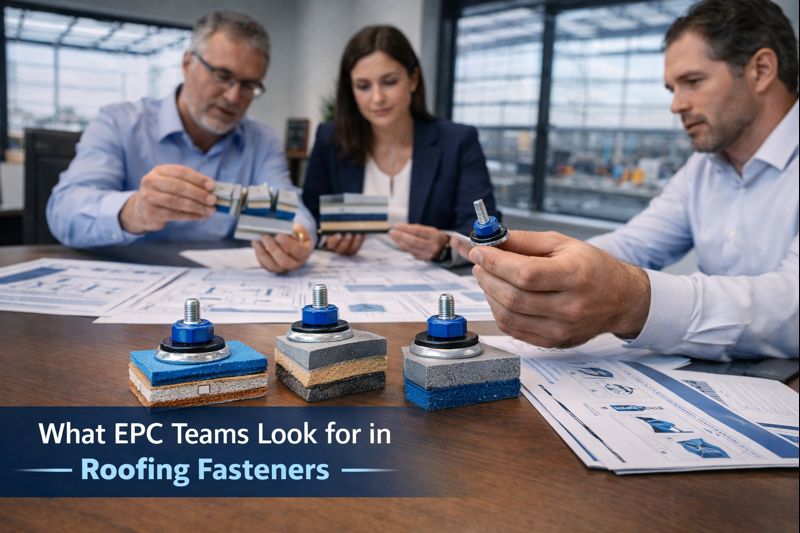
EPC teams evaluate roofing fasteners very differently from small contractors or retail buyers. Their focus is not only on price—but on technical reliability, scalability, and compliance across multiple projects and locations.
Before approving a fastener brand or specification, EPC procurement and engineering teams typically assess the following criteria:
🔹 Technical Compatibility
Fasteners must match roof sheet profiles, substrate thickness, and framing material (steel or wood). Incorrect drill points or thread designs can slow installation or compromise pull-out strength.
🔹 Corrosion Resistance & Coating Class
EPC projects often operate in coastal, industrial, or high-humidity environments. Fasteners are evaluated based on coating systems (e.g., zinc, multi-layer corrosion protection) and salt spray test performance to ensure long service life.
🔹 Washer Quality & Sealing Performance
Poor-quality EPDM washers are a leading cause of roof leakage in large projects. EPC teams check washer compression, UV resistance, and long-term sealing capability under thermal movement.
🔹 Consistency & Batch Reliability
Fasteners must perform consistently across bulk orders. Variations in hardness, drill tip sharpness, or coating thickness can create site-level failures and delays.
🔹 Compliance & Documentation
Engineering approvals depend on test reports, technical datasheets, and certifications. Clear documentation simplifies approval cycles and reduces back-and-forth between design and procurement teams.
🔹 Supply Capacity & Lead Time
EPC timelines are tight. Suppliers must demonstrate the ability to deliver large quantities on schedule, without quality variation across shipments.
For EPC projects, roofing fasteners are treated as engineered components, not commodities. The right selection reduces execution risk, protects warranty commitments, and ensures predictable performance throughout the building lifecycle.
Common Roofing Fastener Challenges in Large EPC Projects
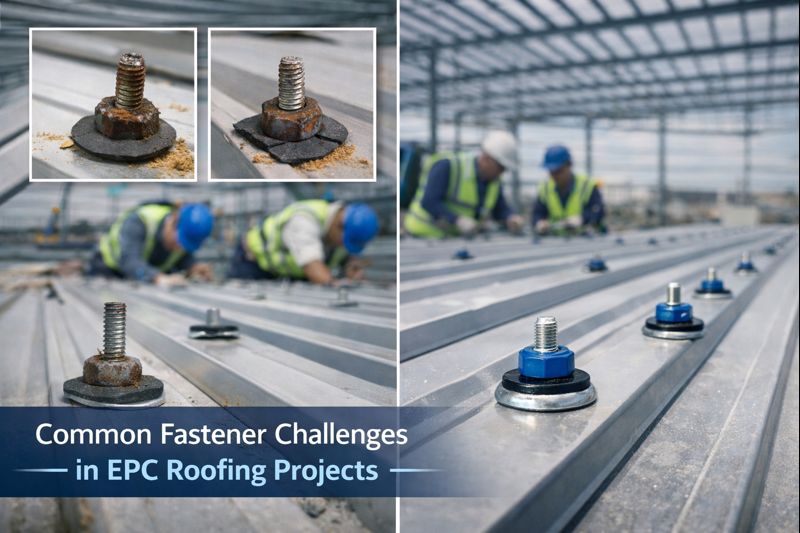
Large EPC roofing projects operate at scale, which means even small fastener-related issues can quickly turn into cost overruns, delays, or long-term performance risks. Based on industry experience, EPC teams commonly face the following challenges:
🔹 Inconsistent Fastener Quality Across Batches
Variations in drill point geometry, thread depth, or coating thickness across bulk shipments can lead to uneven installation speed and inconsistent holding strength across different project zones.
🔹 Corrosion Failures in Aggressive Environments
Fasteners that are not correctly specified for marine, industrial, or chemical exposure zones often show early signs of rust—compromising roof integrity and increasing maintenance costs.
🔹 Washer Degradation & Leakage Issues
Low-grade EPDM washers may harden, crack, or lose elasticity under prolonged UV exposure and temperature cycles, leading to micro-leaks that are difficult to detect during initial inspections.
🔹 Incorrect Fastener Selection for Substrate Thickness
Using fasteners with inadequate drilling capacity or incorrect length can cause thread stripping, poor pull-out resistance, or over-tightening—especially in steel purlins and pre-engineered structures.
🔹 Installation Inefficiencies on Large Sites
Poor drill tip design or inconsistent hardness increases installation time per screw, slowing down roofing crews and affecting overall project timelines.
🔹 Approval & Rework Delays
When fasteners fail on-site tests or do not match approved specifications, EPC teams face re-approval cycles, material replacement, and labor rework—directly impacting delivery schedules.
In EPC environments, these challenges highlight why fastener selection is treated as a risk-management decision, not just a procurement line item.
How EPC Contractors Standardize Roofing Fasteners Across Projects
For EPC contractors handling multiple industrial, commercial, or infrastructure projects simultaneously, standardization of roofing fasteners is essential for controlling cost, quality, and execution risk. Rather than selecting fasteners on a project-by-project basis, EPC teams create pre-approved fastening frameworks that can be applied consistently across sites.
🔹 Creation of Approved Fastener Specifications
EPC engineering teams first define standard fastener specifications based on:
Roof type (metal sheet, sandwich panel, fiber cement)
Substrate (steel purlin thickness, aluminum, concrete)
Environmental exposure (coastal, industrial, inland)
Structural load and wind uplift requirements
Once finalized, these specifications are locked into approved material lists (AMLs) and used across multiple projects.
🔹 Limiting Variants to Control Risk
Instead of sourcing dozens of screw types, EPC contractors typically limit fasteners to a small set of standardized SKUs that cover most use cases. This reduces:
Installation errors
Inventory complexity
Training requirements for site crews
🔹 Standardization by Application Category
| Application Type | Standardized Fastener Selection | Why EPCs Prefer This |
|---|---|---|
| Metal-to-metal roofing | Self-drilling screws with controlled drill capacity | Faster installation and consistent penetration |
| High-exposure roofing zones | Corrosion-resistant coated fasteners | Predictable service life across environments |
| Leak-critical roof areas | Screws with tested EPDM bonded washers | Long-term waterproofing performance |
| Large-area sheet fixing | Optimized thread design for pull-out strength | Reduces rework and fastener failure |
🔹 Centralized Procurement & Vendor Alignment
Standardization allows EPC firms to:
Procure in bulk at negotiated rates
Ensure uniform quality across regions
Align suppliers with long-term project pipelines
Suppliers are often audited for consistency in coating thickness, washer quality, hardness, and dimensional accuracy before being approved.
🔹 Documentation & Site-Level Execution
Standardized fastener specs are documented in:
Project BOQs
Method statements
Installation SOPs
Quality checklists used by site engineers
This ensures that even across different locations and teams, roofing installation follows the same technical benchmark.
By standardizing roofing fasteners, EPC contractors transform fastening from a variable risk into a controlled, repeatable system—supporting faster execution, predictable performance, and scalable project delivery.
Technical Specifications EPC Teams Prioritize
For EPC contractors, roofing fasteners are not evaluated like general construction consumables. They are treated as engineered components that must perform reliably across large spans, harsh environments, and long project lifecycles. Procurement and engineering teams therefore prioritize measurable, test-backed technical specifications over marketing claims.
Below are the core technical parameters EPC teams scrutinize before approving any roofing fastener.
🔹 1. Drill Point Geometry & Penetration Capacity
EPC teams verify:
Maximum steel thickness the drill tip can penetrate
Consistency of drill performance across batches
Reduced walking or skidding on metal sheets
A poorly designed drill tip can slow installation, overheat, or cause misalignment—leading to labor delays and rework at scale.
🔹 2. Corrosion Resistance & Coating Performance
Fasteners used in industrial roofing must withstand years of exposure to:
Moisture
Pollutants
Temperature variation
Rather than coating names, EPC teams look for:
Coating thickness consistency
Performance in corrosion-resistance testing
Suitability for inland, industrial, or coastal zones
This ensures predictable service life across different geographies.
🔹 3. Washer Quality & Sealing Reliability
Washers are a critical failure point in roofing systems.
EPC teams assess:
EPDM bonding strength
Resistance to UV cracking and hardening
Uniform compression under torque
Inferior washers often cause micro-leaks, which escalate into major maintenance issues in large facilities.
🔹 4. Thread Design & Pull-Out Strength
Thread geometry directly impacts:
Load distribution
Vibration resistance
Long-term holding strength
Fasteners must provide consistent pull-out values across:
Steel purlins
Light-gauge frames
Structural steel sections
🔹 5. Dimensional Accuracy & Batch Consistency
EPC procurement teams demand:
Uniform length and diameter tolerances
Consistent head geometry
Repeatable performance across bulk orders
Inconsistent dimensions disrupt automated installation tools and affect torque control on-site.
🔹 Key Technical Criteria EPC Teams Evaluate
| Specification Area | What EPC Teams Check | Why It Matters at Scale |
|---|---|---|
| Drill Capacity | Penetration depth & steel thickness capability | Faster installation, fewer bit failures |
| Corrosion Protection | Coating durability & exposure suitability | Predictable lifespan across regions |
| Washer Performance | EPDM quality & sealing behavior | Leak prevention in large roof areas |
| Thread Engineering | Pull-out strength & vibration resistance | Structural stability over time |
| Dimensional Consistency | Length, diameter, head uniformity | Smooth site execution and tool compatibility |
🔹 Why EPC Teams Are Extremely Specification-Driven
In EPC projects:
A single fastener failure can affect hundreds of square meters
Rework costs multiply rapidly
Quality lapses impact warranties and handover commitments
That’s why EPC teams rely on technical documentation, testing benchmarks, and repeatability, not just price.
Role of Compliance, Testing & Documentation in EPC Procurement
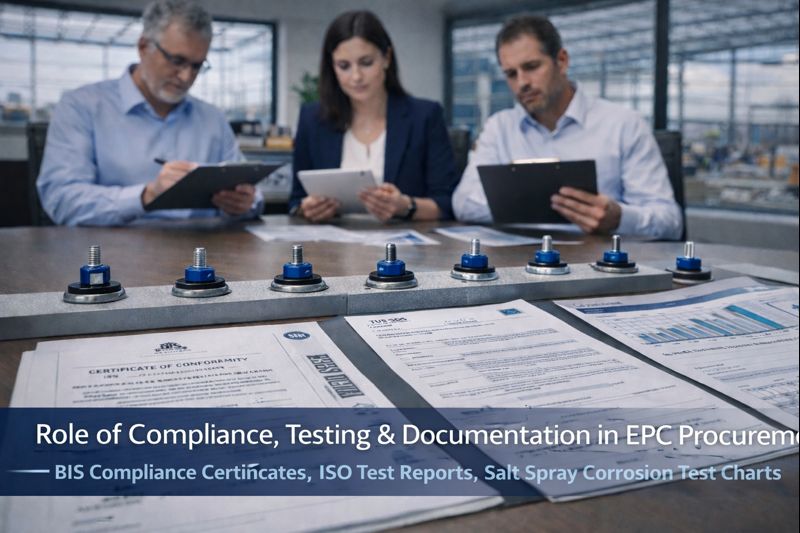
In EPC-led construction, roofing fasteners are approved on paper before they are approved on site. Compliance, testing, and documentation play a decisive role in whether a fastener supplier is shortlisted or rejected—often regardless of price.
EPC procurement teams treat fasteners as traceable construction components, not commodities.
🔹 1. Regulatory Compliance (BIS & Industry Standards)
EPC contractors prioritize fasteners that comply with:
BIS standards applicable to self-drilling and structural fasteners
Project-specific technical specifications
Client or consultant-mandated benchmarks
Compliance reduces risk during:
Third-party audits
Consultant reviews
Final project handover
Non-compliant fasteners can trigger rejections—even after installation.
🔹 2. Corrosion Testing & Salt Spray Performance
Roofing fasteners are continuously exposed to:
Moisture ingress
Atmospheric pollutants
Thermal cycling
EPC teams evaluate:
Salt spray test performance under controlled conditions
Consistency of corrosion resistance across batches
Suitability for industrial, coastal, or high-humidity environments
Testing-backed performance provides confidence that fasteners will not become a maintenance liability post-handover.
🔹 3. Mechanical Testing & Performance Validation
Beyond corrosion, EPC teams look for documentation covering:
Pull-out strength
Torque resistance
Washer compression behavior
These parameters directly affect:
Roof integrity
Long-term vibration resistance
Load-bearing reliability
🔹 4. Batch Consistency & Traceability
Large EPC projects require bulk procurement over extended timelines. As a result, consistency matters as much as performance.
Procurement teams assess:
Batch-to-batch uniformity
Traceable lot numbers
Repeatable test results across supplies
This ensures predictable installation behavior across multiple project phases.
🔹 5. Documentation That EPC Teams Expect
Well-organized documentation often decides whether a supplier moves forward.
Typical EPC requirements include:
Test reports and compliance certificates
Product technical datasheets
Quality assurance records
Clear documentation simplifies approvals and builds trust between engineering, procurement, and site execution teams.
▶️ Why Compliance & Documentation Matter in EPC Projects
In EPC environments:
Technical approvals precede commercial negotiations
Documentation reduces risk exposure
Compliance safeguards warranties and contractual obligations
Suppliers who can demonstrate tested, documented, and consistent performance gain a clear advantage in EPC procurement processes.
Why EPC Projects Prefer Working with Specialized Fastener Brands
In EPC projects, procurement decisions are rarely driven by lowest price alone. Large-scale construction operates on tight timelines, strict specifications, and shared accountability—making reliability far more valuable than short-term cost savings.
This is why EPC contractors consistently prefer working with specialized fastener brands rather than generic, price-only vendors.
🔹 1. Predictable Performance Across Large Volumes
EPC projects involve:
Multiple buildings or phases
Thousands to lakhs of fasteners
Long execution timelines
Specialized brands offer consistent quality across batches, ensuring installers experience the same drilling speed, holding strength, and washer performance throughout the project.
Price-driven vendors often fail to maintain this consistency, leading to:
Variable installation behavior
Increased site issues
Rework and delays
🔹 2. Engineering-First Product Design
Specialized fastener brands design products specifically for:
Roofing and cladding loads
Sheet thickness variations
Metal-to-metal and metal-to-wood applications
This engineering focus ensures fasteners perform as intended under real site conditions—not just in lab tests.
EPC teams value products that are designed for applications, not generic fasteners repurposed for roofing.
🔹 3. Reduced Risk During Installation & Handover
Installation issues caused by poor fasteners can escalate into:
Roof leak complaints
Consultant objections
Warranty disputes
Specialized brands minimize these risks by offering:
Proven washer sealing performance
Stable coatings for long-term exposure
Documented test-backed reliability
This reduces callbacks, disputes, and post-handover liabilities.
🔹 4. Technical Support & Pre-Approval Confidence
EPC teams often require:
Fastener recommendations during design stages
Clarifications during consultant reviews
Quick technical validation before bulk procurement
Specialized brands are equipped to support:
Technical queries
Specification alignment
Approval documentation
Price-only vendors typically lack this capability, slowing down procurement cycles.
🔹 5. Long-Term Value vs Short-Term Savings
While generic fasteners may appear cheaper initially, EPC teams evaluate total project cost, including:
Installation efficiency
Rework risk
Maintenance exposure
Reputation with clients and consultants
Specialized fastener brands deliver long-term value, making them the safer and more strategic choice for EPC-led construction.
▶️ EPC Procurement Reality
In EPC projects:
Reliability protects timelines
Consistency protects quality
Specialization protects accountability
That’s why experienced EPC contractors partner with fastener brands built for roofing performance—not just pricing competition.
Why Roofix Is Trusted for EPC & Industrial Roofing Projects
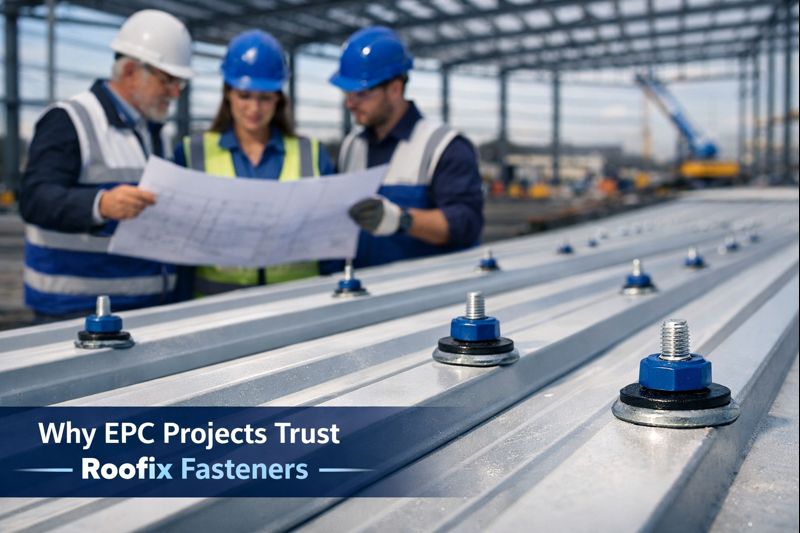
EPC and industrial projects demand more than just product availability—they require predictable performance, technical confidence, and supply reliability at scale. Roofix has built trust in these environments by aligning its fastener solutions with the real-world challenges faced on large construction sites.
🔹 1. Purpose-Built for Roofing & Cladding Applications
Roofix fasteners are engineered specifically for:
Industrial roofing systems
Metal-to-metal and metal-to-structure applications
High-wind and high-load environments
This application-first approach ensures consistent drilling, controlled seating, and secure long-term fastening—critical for EPC-led projects.
🔹 2. Consistent Quality Across Large-Volume Supply
EPC projects often involve multi-location or phased execution. Roofix maintains:
Uniform product specifications
Stable coating performance
Repeatable batch quality
This consistency helps EPC teams avoid installation variability and ensures smooth execution from the first building to the last.
🔹 3. Compliance-Ready & Documentation Friendly
Roofix products are developed to support EPC approval workflows, offering:
BIS-aligned manufacturing practices
Coating and corrosion resistance validation
Clear technical specifications for consultant and PMC reviews
This reduces approval delays and builds confidence at every procurement checkpoint.
🔹 4. Site-Focused Reliability That Reduces Risk
Roofix fasteners are designed to:
Minimize washer failures and leak risks
Maintain holding strength over time
Perform reliably in harsh industrial conditions
For EPC teams, this means fewer callbacks, smoother handovers, and lower long-term liability.
🔹 5. Trusted by Contractors Who Value Performance Over Price
Roofix is chosen by professionals who understand that:
Fasteners are a structural detail, not a commodity
Small failures can create large project risks
Long-term performance protects both reputation and ROI
This makes Roofix a dependable partner for EPC contractors executing high-stakes industrial roofing projects.
Conclusion – Building Long-Term Performance Through Standardization
In EPC-led construction, roofing fasteners are not a minor detail—they are a critical control point that directly impacts structural integrity, execution speed, and long-term asset performance.
Standardizing roofing fasteners across projects allows EPC teams to:
Reduce on-site errors and installation variability
Simplify procurement, approvals, and quality audits
Ensure predictable performance across multiple locations and phases
When fasteners are selected based on tested performance, compliance readiness, and application suitability, they become a reliability factor—not a risk.
For large industrial and infrastructure projects, the real advantage comes from working with fastener solutions that are designed for scale, consistency, and long-term durability. This approach protects project timelines, reduces lifecycle maintenance issues, and strengthens confidence across all stakeholders—from consultants to end clients.
Standardization isn’t about limiting choice.
It’s about choosing once—and choosing right.
Share on:
Recent posts
Hex Head Socket for Roofing Screws: What It…
Roofing Sealants Explained: Types, Uses & How to…

EPDM Washer in Roofing Screws: Why It Matters…
Get a free Estimate
Related Posts
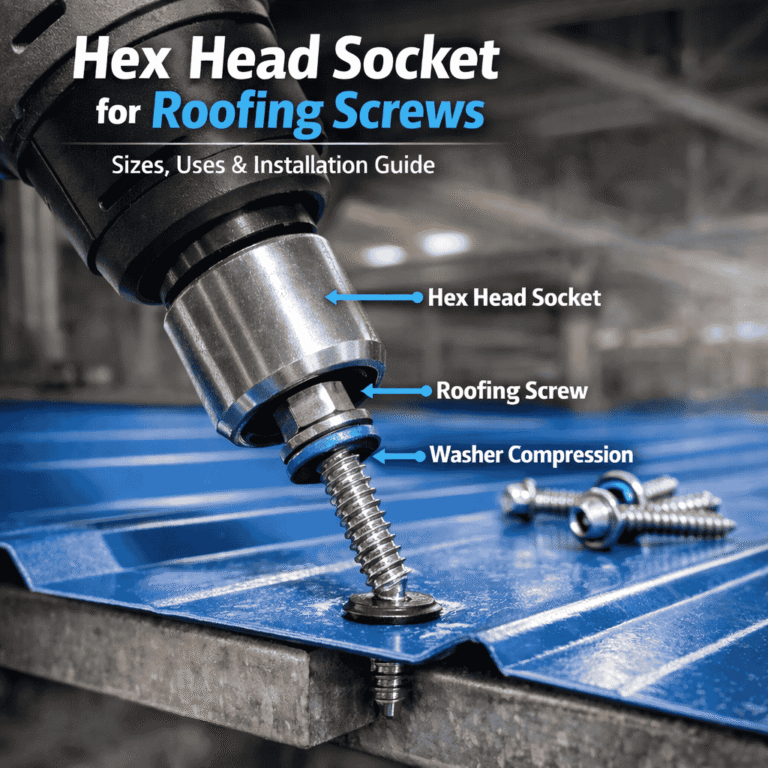
Hex Head Socket for Roofing Screws: What It Is…
Hex Head Socket for Roofing Screws: What It Is and Why Installers Use It Hex…
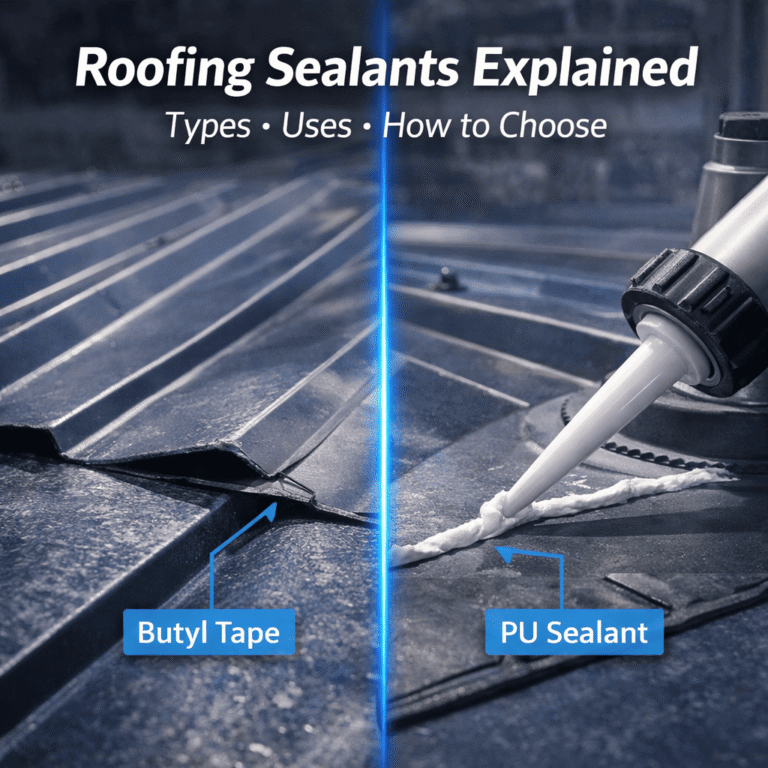
Roofing Sealants Explained: Types, Uses & How to Choose…
Roofing Sealants Explained: Types, Uses & How to Choose the Right One Roofing Sealants Explained:…
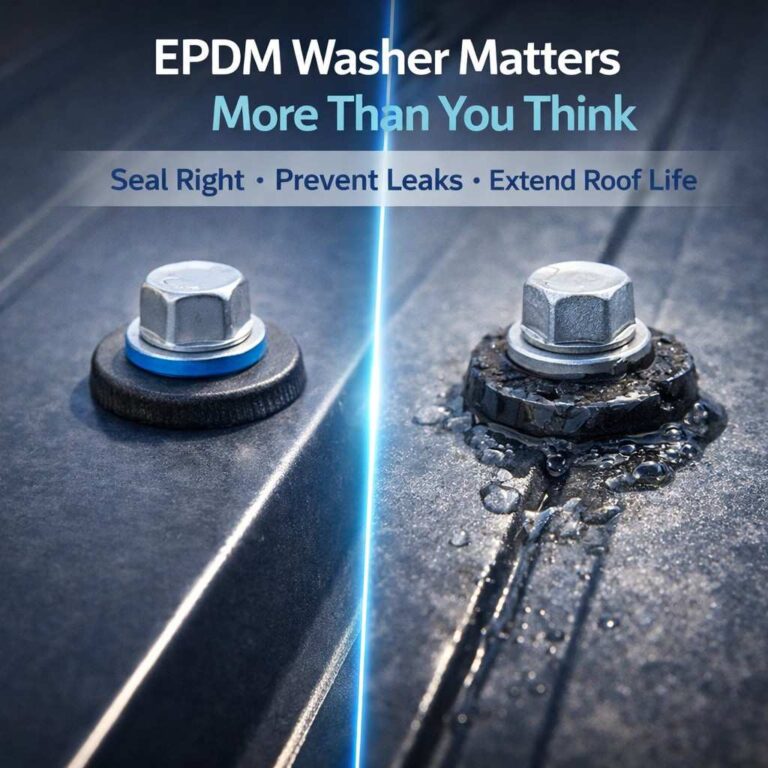
EPDM Washer in Roofing Screws: Why It Matters More…
EPDM Washer in Roofing Screws: Why It Matters More Than You Think EPDM Washer in…
