
...

Roofix

How Procurement Teams Choose Roofing Fasteners for Large Construction Projects

How Procurement Teams Choose Roofing Fasteners for Large Construction Projects

Procurement Is Not Just Buying Screws

roofing fasteners procurement

In large construction projects, roofing fasteners are rarely treated as a standalone purchase. For procurement teams, they are a risk-sensitive component—small in size, but directly linked to structural integrity, weather performance, and long-term maintenance costs.

Unlike retail purchases, procurement decisions for roofing fasteners involve technical evaluation, compliance checks, supplier reliability, and lifecycle cost analysis. A wrong choice doesn’t just affect installation—it can lead to rework, leakage complaints, warranty issues, and project delays.

This is why experienced procurement teams do not select roofing fasteners based on price alone. Instead, they follow a structured evaluation process that balances:

  • Technical suitability

  • Project environment

  • Supplier capability

  • Consistency across bulk orders

Understanding how this decision-making works helps contractors, engineers, and distributors align better with project requirements—and avoid costly mistakes later.

Technical Criteria Procurement Teams Evaluate First

Before pricing or supplier discussions begin, procurement teams focus on technical suitability. This step is critical because fasteners interact directly with roofing sheets, substrates, and environmental loads.

1️⃣ Material Compatibility

Procurement teams first verify that the fastener material is compatible with:

  • Roofing sheet type (metal, fiber cement, polycarbonate)

  • Substrate (steel purlins, aluminum frames, wooden battens)

Using an incompatible screw can lead to galvanic corrosion, reduced holding strength, or premature failure—even if the screw itself appears “high quality.”


2️⃣ Coating Type & Corrosion Resistance

Fasteners are exposed continuously to moisture, temperature variation, and pollutants. Procurement teams therefore assess:

  • Coating composition (zinc-based, multi-layer, organic coatings)

  • Intended exposure environment (industrial, coastal, high-humidity zones)

  • Expected service life aligned with project warranty periods

A fastener that performs well in light industrial conditions may not be suitable for coastal or chemical-exposed environments.


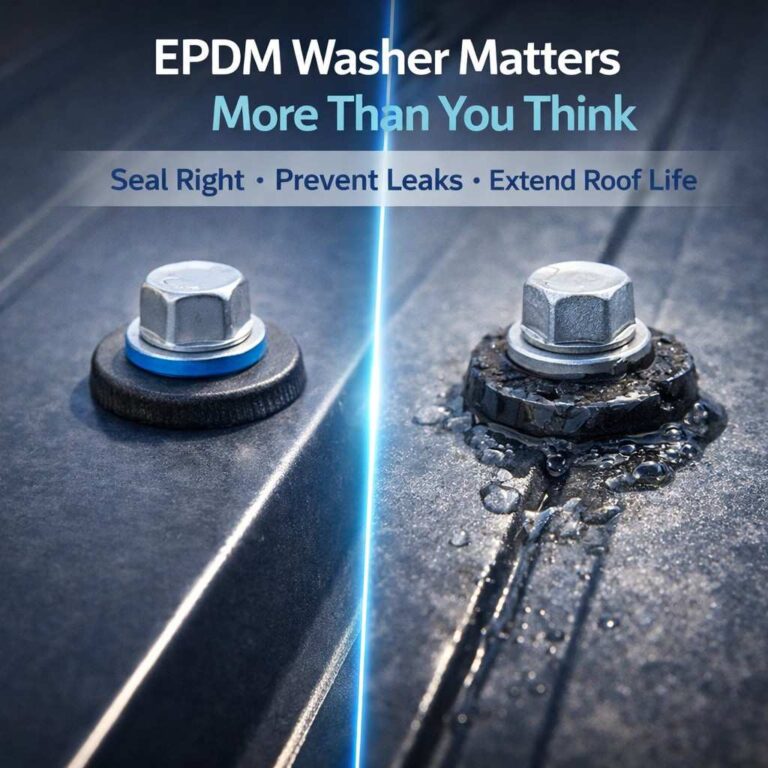
3️⃣ Washer Quality & Sealing Performance

Washers are evaluated separately from screws. Key checks include:

  • EPDM or bonded washer material quality

  • Resistance to cracking under UV exposure

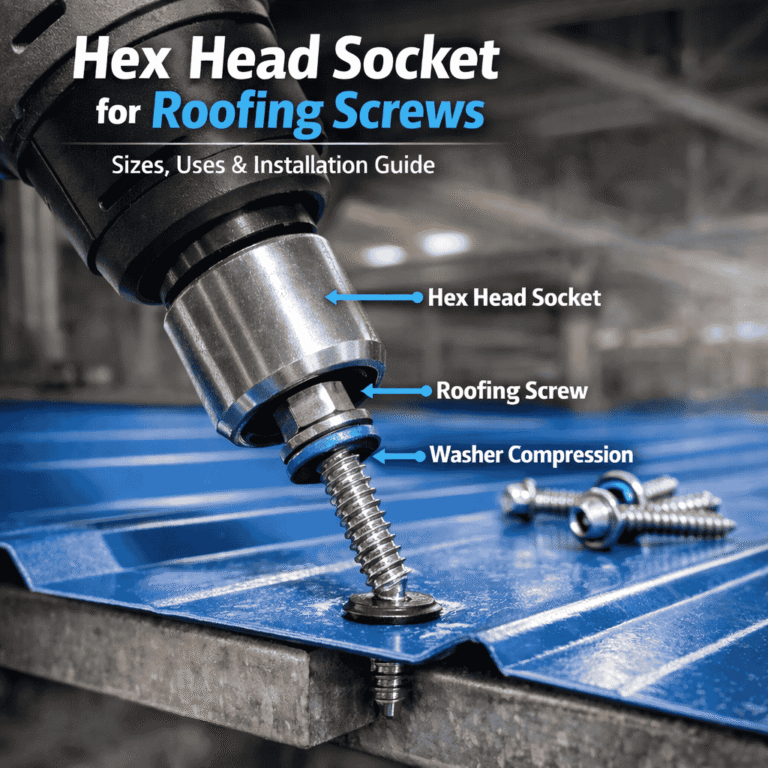
  • Compression behavior under tightening torque

Poor washer performance is one of the most common causes of early roof leakage—even when screws are correctly installed.


4️⃣ Thread Design & Pull-Out Strength

For large roofing projects, fasteners must withstand:

  • Wind uplift forces

  • Thermal expansion and contraction

  • Long-term vibration

Procurement teams look for thread profiles that ensure consistent grip across bulk installations, especially on thin-gauge steel substrates.


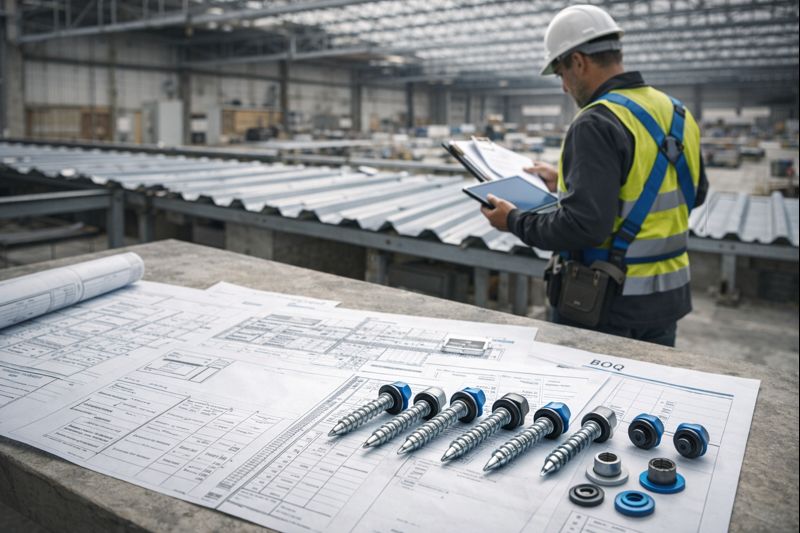
5️⃣ Compliance & Documentation

Technical evaluation is incomplete without documentation. Procurement teams typically request:

  • Test reports or compliance certificates

  • Dimensional consistency data

  • Batch traceability (especially for repeat orders)

This step protects the project from inconsistent quality across deliveries.

Supplier Reliability & Bulk Order Consistency

bulk roofing fasteners supplier

In large-scale construction projects, even technically sound fasteners can become a risk if supplier consistency is not reliable. Procurement teams therefore evaluate suppliers with the same rigor as the product itself.

1️⃣ Consistency Across Bulk Production

For projects involving tens or hundreds of thousands of fasteners, procurement teams assess:

  • Uniform coating thickness across batches

  • Consistent washer quality and bonding

  • Dimensional accuracy in screw length and diameter

Inconsistent batches can lead to uneven installation torque, sealing issues, or visible quality variation on finished roofs.


2️⃣ Availability & Lead Time Predictability

Project timelines depend heavily on material flow. Procurement teams prioritize suppliers who can:

  • Maintain stock continuity for repeat orders

  • Commit to realistic dispatch timelines

  • Support phased deliveries aligned with project schedules

Unplanned delays at the fastener level can stall entire roofing operations on-site.


3️⃣ Technical Support & Pre-Supply Guidance

Reliable suppliers support procurement teams before delivery by:

  • Recommending correct fastener types for specific roof assemblies

  • Clarifying coating suitability for environmental exposure

  • Assisting with sample approvals or mock installations

This reduces the risk of selecting fasteners that appear suitable on paper but underperform in real conditions.


4️⃣ Replacement & Issue Handling

Procurement teams also consider how suppliers respond when issues arise:

  • Handling of transit-damaged stock

  • Replacement support for mismatched specifications

  • Clear escalation channels for technical concerns

Responsive after-supply support significantly reduces project risk and administrative overhead.

Cost Evaluation Beyond Per-Unit Pricing

For procurement teams, the true cost of roofing fasteners extends well beyond the price printed on a quotation. While per-unit pricing is important, it is only one part of the total project cost equation.

1️⃣ Installation Efficiency

Fasteners that drill cleanly and seat properly reduce:

  • Installation time per sheet

  • Tool wear and operator fatigue

  • Rework caused by stripped threads or misaligned washers

Even small time savings per fastener can translate into significant labor cost reductions on large projects.


2️⃣ Failure & Replacement Risk

Lower-cost fasteners may appear economical upfront but can increase:

  • Leakage complaints

  • Fastener pull-out or washer failure

  • Post-installation replacement work

Procurement teams often factor the probability of failure into cost decisions, especially for projects with long warranty periods.


3️⃣ Maintenance & Access Costs

Replacing failed fasteners is rarely simple. It may involve:

  • Roof access equipment

  • Production downtime (for warehouses or factories)

  • Safety risks for maintenance teams

A slightly higher initial fastener cost is often justified if it reduces future maintenance intervention.


4️⃣ Lifecycle Cost Perspective

Experienced procurement teams evaluate fasteners based on:

  • Expected service life vs project lifespan

  • Environmental exposure conditions

  • Cost of reinstallation over time

This lifecycle-based approach aligns procurement decisions with long-term asset performance rather than short-term savings.

How Procurement Teams Validate Fastener Quality Before Approval

How Procurement Teams Validate Fastener Quality Before Approval

Before roofing fasteners are approved for bulk procurement, teams follow a validation process to reduce risk and ensure performance matches specifications. This step bridges technical evaluation and on-site execution.

1️⃣ Sample Testing & Mock Installations

Procurement teams often request samples for:

  • Trial installations on actual roofing sheets and substrates

  • Checking drilling speed and torque behavior

  • Verifying washer compression and sealing consistency

Mock installations reveal issues that specifications alone cannot identify.


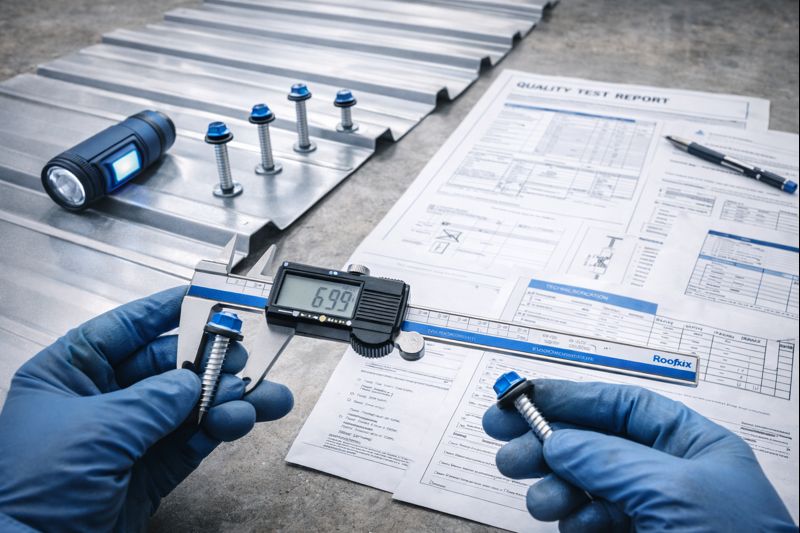
2️⃣ Dimensional & Visual Inspection

Fasteners are inspected for:

  • Accurate length and diameter

  • Uniform coating coverage

  • Washer bonding integrity

Visible inconsistencies during sample inspection often indicate deeper batch-level quality issues.


3️⃣ Documentation Review

Procurement approval typically requires:

  • Test reports or compliance declarations

  • Technical datasheets matching project specifications

  • Confirmation of material grades and coatings

This documentation becomes part of the project quality records.

4️⃣ Pilot Order Evaluation

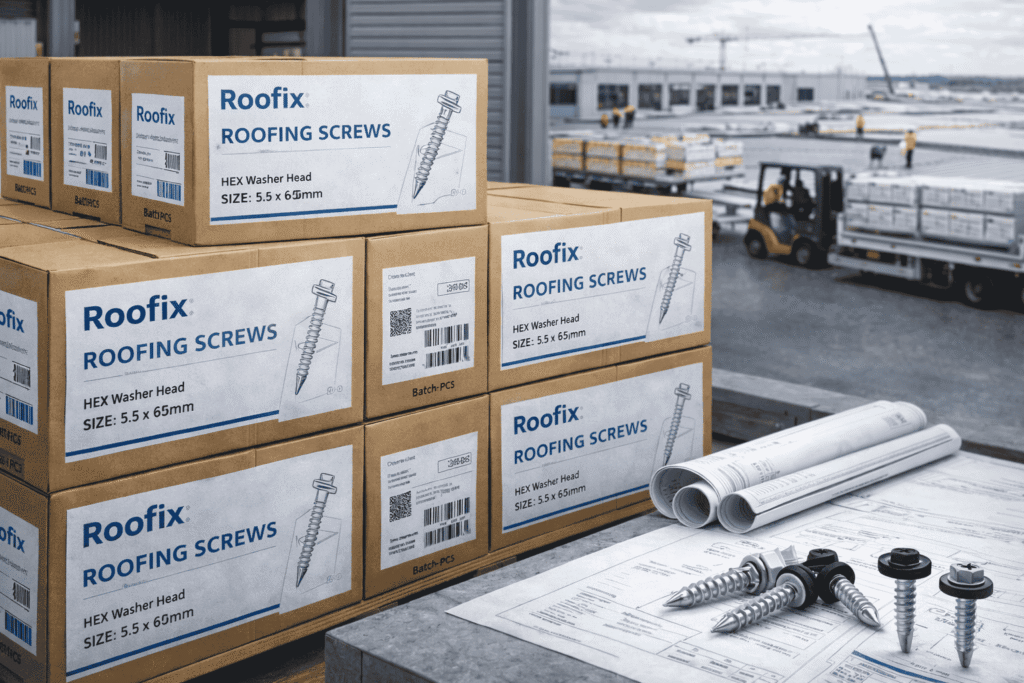
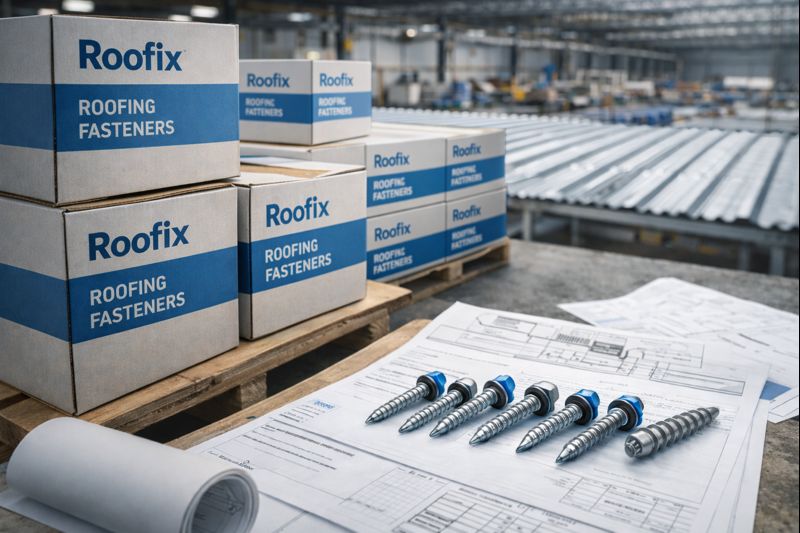
For large projects, procurement teams may place a pilot or trial order to:

  • Check batch consistency

  • Evaluate packaging and labeling accuracy

  • Confirm dispatch reliability

Only after successful pilot performance is full-scale ordering approved.

How Roofing Fastener Decisions Impact Project Outcomes

Roofing fasteners may represent a small portion of the total project cost, but their impact is disproportionately large. Procurement decisions made at the sourcing stage directly influence site execution, post-handover performance, and long-term asset reliability.

1️⃣ Installation Quality & Speed

Correct fastener selection ensures:

  • Smooth drilling without bit slippage

  • Uniform washer seating across large roof spans

  • Reduced installation fatigue for site teams

This results in cleaner workmanship and predictable installation timelines—critical on large-scale projects.


2️⃣ Roof Integrity & Leak Prevention

Fasteners form the primary penetration points on any roof. When correctly specified and consistently supplied, they:

  • Maintain watertight seals under thermal movement

  • Reduce micro-leak paths caused by washer fatigue

  • Support long-term weather resistance

Poor fastener choices, on the other hand, often become the first point of roof failure.


3️⃣ Warranty & Maintenance Exposure

Procurement teams also consider how fasteners affect:

  • Warranty claims and liability exposure

  • Maintenance frequency over the roof’s lifespan

  • Ease of inspection and replacement if required

Reliable fasteners lower both direct maintenance costs and indirect risks such as operational downtime.


4️⃣ Client Confidence & Repeat Business

For contractors and EPC firms, roofing performance reflects directly on credibility. Projects that remain leak-free and maintenance-light:

  • Strengthen client trust

  • Improve chances of repeat contracts

  • Reduce post-completion disputes

In this way, fastener procurement decisions quietly influence business reputation—not just technical outcomes.

How Roofix Supports Procurement Teams in Large Projects

In large construction projects, procurement teams benefit most from suppliers who understand both product performance and project execution realities. Roofix aligns its fastener solutions and supply approach with the practical requirements of roofing contractors, EPC firms, and distributors working on high-volume installations.

Roofix fasteners are designed with:

  • Consistent dimensional accuracy across bulk production

  • Coating systems suited for varied environmental exposures

  • Washer assemblies engineered for reliable long-term sealing

Beyond the product itself, Roofix supports procurement workflows by maintaining:

  • Reliable availability for repeat orders

  • Clear technical documentation for approvals and audits

  • Structured handling of bulk dispatches to match project timelines

This combination of technical reliability and supply consistency helps reduce on-site variability, rework risk, and coordination issues between procurement, engineering, and execution teams.

Conclusion: Technical Decisions That Shape Long-Term Performance

In roofing and construction projects, fasteners are often specified early but evaluated only after failures occur. Understanding how material compatibility, coating systems, substrate thickness, and installation conditions interact helps prevent premature corrosion, loosening, and structural inconsistencies.

For procurement teams, engineers, and contractors, selecting the right fastener is not about brand preference—it is about predictable performance under real site conditions. Clear specifications, tested combinations, and consistent supply play a critical role in reducing on-site adjustments, rework, and long-term maintenance costs.

When fasteners are chosen with technical intent rather than convenience, they support cleaner installations, stronger assemblies, and roofing systems that perform as expected throughout their service life.

Share on:

Get a free Estimate

Related Posts

How Procurement Teams Choose Roofing Fasteners for Large Construction Projects
26Dec

How Procurement Teams Choose Roofing Fasteners for Large Construction…

How Procurement Teams Choose Roofing Fasteners for Large Construction Projects How Procurement Teams Choose Roofing…

Why Screw Coating Matters More Than Sheet Thickness in Roofing Projects
20Dec

Why Screw Coating Matters More Than Sheet Thickness in…

Why Screw Coating Matters More Than Sheet Thickness in Roofing Projects Why Screw Coating Matters…

Fiber Cement Board Screw Length & Thickness Guide (With Practical Use Cases)
13Dec

Fiber Cement Board Screw Length & Thickness Guide (With…

Fiber Cement Board Screw Length & Thickness Guide (With Practical Use Cases) Fiber Cement Board…

Leave a Reply

Your email address will not be published. Required fields are marked *

Seraphinite AcceleratorOptimized by Seraphinite Accelerator
Turns on site high speed to be attractive for people and search engines.